

By David Eskenazi and Steve Rudman
For a number of years, from the mid-1980s through the early 2000s, the Washington Husky football program fancied itself (among other things) as a factory for high-quality tight ends, perhaps justifiably so.
Starting with Rod Jones (1984-86) and continuing through Jerramy Stevens (1999-01), the Huskies rolled out three tight ends who earned some measure of All-America recognition, four who made first-team All-Pac-10, and seven deemed good enough to be drafted by National Football League teams.
One of those luminaries Mark Bruener (1991-94) spent 14 seasons in the NFL with Pittsburgh and Houston before retiring following the 2008 season. Another, Ernie Conwell (1992-95), played 11 years with St. Louis and New Orleans, exiting the NFL in 2006. Three others, Aaron Pierce (1988-91), Cam Cleeland (1994-97), and Stevens (2000-10), played between seven and nine years at the pro level.
Still another, Eric Bjornson, played briefly as a quarterback and regularly at split end during his Husky career (1992-95) and then transitioned into a tight end in the NFL, lasting six years with Dallas and New England.
The Husky tight ends spanning Jones through Stevens combined to score 65 NFL touchdowns after departing UW, and all had memorable moments, none more dramatic than that produced by Cleeland, who caught a 17-yard, game-winning touchdown pass inside of two minutes from Marc Bulger on Jan. 8, 2005, at Qwest (now CenturyLink) Field to knock the Seahawks out of the playoffs, 27-20.
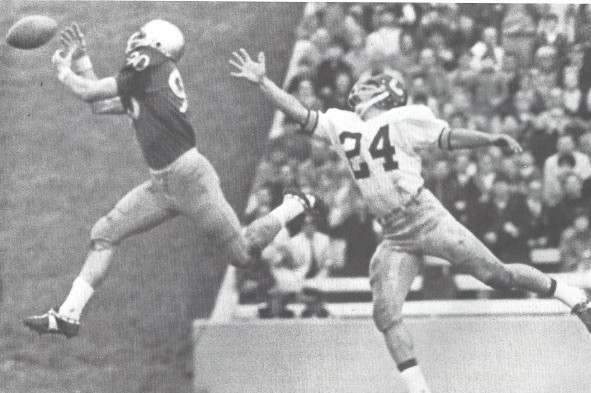
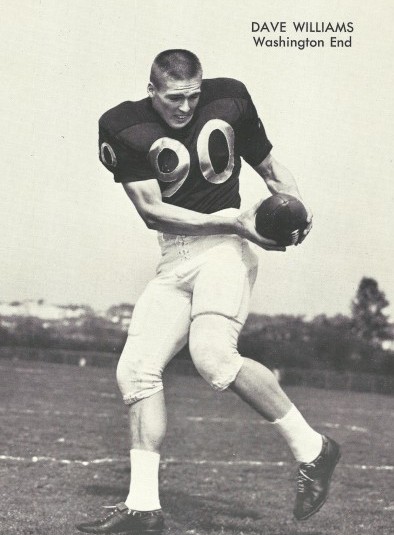
None of the aforementioned tight ends (or ex-UW receivers, for that matter) had a better or more intriguing career than a 6-2, 207-pound Lincoln of Tacoma graduate who played that position (TE) under Jim Owens nearly 50 years ago, setting UW receiving records that endure today.
He also competed in the U.S. Olympic Track & Field Trials just one year out of high school, scored points in three NCAA track championships, became Washingtons only No. 1 NFL draft choice between Hugh McElhenny (1952) and Blair Bush (1978), was the first player signed by the Seattle Seahawks, and might have made jersey number 80 famous instead of the player who did, if not for a goofball obstacle race.
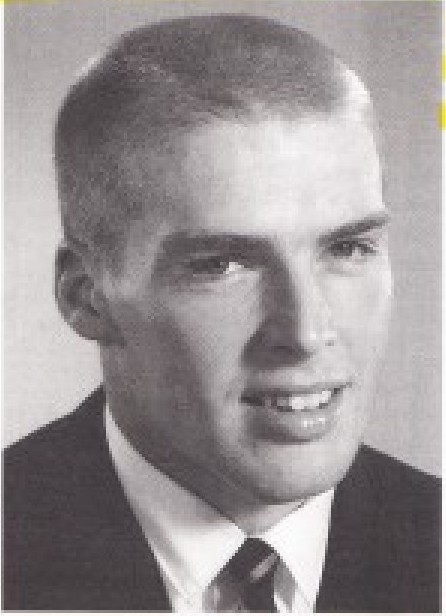
Remarkable about Dave Williams is that 44 years after his career (1964-67) ended, he still ranks No. 1 on the list of receiving yards by a UW tight end (1,133), No. 1 in single-season yards (795), No. 1 in single-game yards by a tight end or a receiver (257), No. 1 in single-game TDs by a tight end (3) and tied for No. 1 in career TDs by a tight end (10) and receptions by a tight end in a game (10, twice).
Williams, who earned 12 letters in football, basketball and track at Lincoln High in Tacoma (he made the Seattle Times High School Football Team of the Century in 1999), entered the University of Washington in the fall of 1964, a few months after ending his prep career by winning the state hurdles championship.
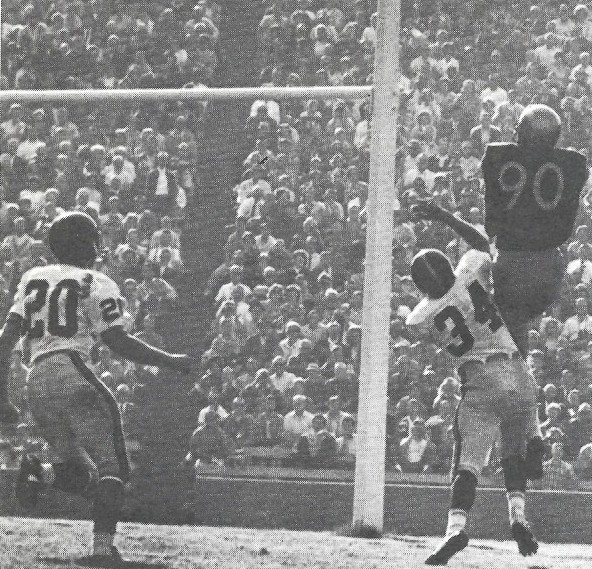
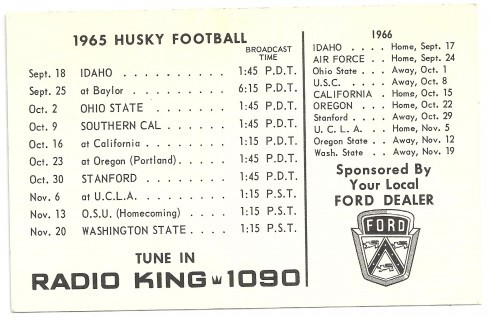
His signature game occurred on Nov. 6, 1965, when Washington faced UCLA in front of 46,084 fans at the Rose Bowl. Oddsmakers installed the Bruins, coming off four straight victories, as 10-point favorites. But with 6:48 elapsed, the Huskies had a 14-0 lead.
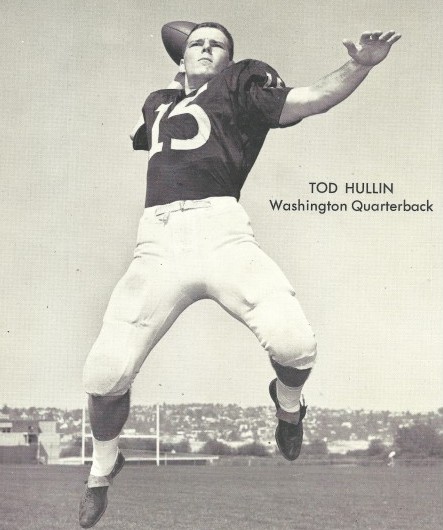
In the opening two minutes, UW quarterback Tod Hullin fired a long pass from midfield that Williams snagged on the UCLA 15-yard line and took in for the score. Four minutes later, Williams got behind the UCLA defense and Hullin drilled him with a shot that went for a 56-yard touchdown.
Since no one was inclined then or later to engage in any research, it went unreported that Williams had just become the first receiver in 76 years of Husky football to score on two 50-yard scoring plays in the same game in fact, in the same quarter. Williams feat looks even more impressive now in context.
It would not be duplicated until Tom Scott also scored on two 50-yard TD plays (50, 66) against the Bruins in 1971, then not again until Spider Gaines had a pair (74, 58) against Alabama in 1978, and then not again until Marcel Reece had two (69, 63) against Washington State in 2007.
These are the only four occurrences of a receiver snagging two 50-yard TDs in the same game through the first 121 years of Husky football. Only Williams, the lone tight end in the bunch, did it in one quarter.
Despite Williams history-making touchdowns, the UW defense couldnt contain UCLAs sophomore quarterback, Gary Beban, two years away from winning the Heisman Trophy. Beban threw a 58-yard touchdown to Dick Witcher immediately after Williams second score, cutting Washingtons lead to 14-7.
With three minutes remaining in the half, Hullin orchestrated another scoring drive that ended when he tossed 11 yards to Williams in the corner of the end zone. Williams alley-oop snag and Ron Medveds extra point gave Washington a 21-7 lead.
With his third TD, Williams joined George Black (1952 against Kansas State) as the only receivers in UW history (because he lined up eight yards away from the nearest tackle in an era in which ends usually lined up one yard away, Black qualifies as the UW’s first “wide receiver”) to catch three touchdown passes in a game. In the next 46 years, the UW would get three-TD performances from just five other receivers, none of them a tight end.
Unfazed by such unfolding history, Beban assumed command. He directed a 72-yard scoring drive, scoring on a one-yard sneak. Medved gave Washington a 24-14 lead with a 20-yard field goal just before halftime, but Beban skirted around left end and bolted 60 yards for a touchdown to open the second half, making it 24-21.
Shortly thereafter, Medved caught a Hullin pass, but fumbled as he was tackled. The Bruins recovered on the UCLA 39, setting up a 66-yard touchdown collaboration between Beban and Witcher that stood up for a 28-24 Bruins victory.
Williams finished with 10 receptions, matching the single-game school record for a tight end (as well as for a wide receiver) that he had set a week earlier in a 41-8 romp over Stanford. In the 46 years since, no other UW tight end has reached double figures in receptions in a single game. Not one had even nine until Jerramy Stevens in the 2001 Holiday Bowl.
Aside from the touchdowns and receptions, the remarkable number by Williams was — and remains — his 257 receiving yards. With Hullin completing 18 of 28 throws for a school-record 354 yards (the record was 292 by Don Heinrich against Kansas State in 1952), Williams not only obliterated the UW mark record for single-game receiving yards 184 by Roland Kirkby in 1950 he smashed the conference record of 252 by Gail Cogdill of Washington State against Northwestern in 1958.
It would require 22 more years before another Husky receiver wideout Darryl Franklin in 1987 cracked 200 yards (209 vs. Stanford). Through 2010, no Husky receiver has come within 34 yards of Williams mark (Andre Riley 223 vs. ASU in 1989). And no tight end has come within 137 yards of Williams record, Scott Greenwoods 120 vs. Oregon in 1977 being the closest.
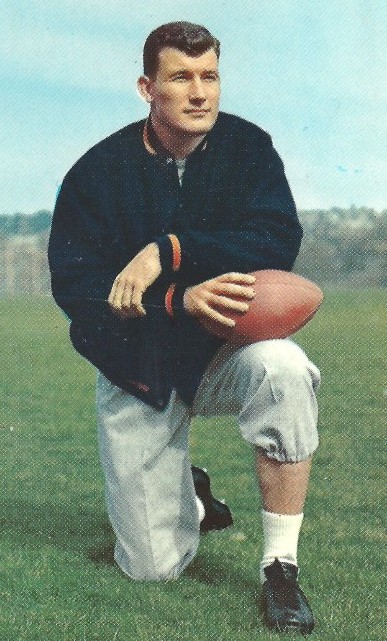
UCLA stunted a lot, Hullin told reporters after the game. They threw us for some losses, but we got away for some long ones. This is what happens when you stunt like that. Williams did a really fine job. I didnt expect him to get loose as much as he did.
I thought UCLA was keying more on (Ron) Medved and (Steve) Bramwell, Williams said then. You cant cover like that.
As Williams recalls it now, what happened at UCLA nearly 50 years ago had its roots in his first year at the UW, 1964, when freshman were not eligible for varsity competition.
Tod and I had spent a lot of time on the scout team, the Red Raiders, and we really got familiar with each other, said Dave. Tod had a great arm, especially on the long passes, and he would just lay it out for me. I think that a lot of the UCLA defenders didnt realize my speed, that and the fact that we tried to spread the field that day. We were not really a throwing team.
Consider these comparisons. Jim Owens ball-control Huskies averaged 18 passes a game in 1965. When Sonny Sixkiller arrived five years later (1970), the Huskies averaged 41.5. Under pass-drunk Rick Neuheisel when Cody Pickett was a junior in 2002, Washington averaged 47.8.
The UCLA game was just one of those days when we (Hullin and Williams) connected, said Williams. He (Hullin) certainly was one of the better quarterbacks I ever played with. We could really read each other, and we developed great rapport.
Williams caught 38 passes in 1965 (the Huskies completed only 99 all season), a UW tight end record that would last for 24 years until Bill Ames caught 39 in a 12-game season (vs. Williams 10) in 1989, and a mark that still ranks fifth on the UW career list.
Over three seasons (1965-67), Williams accumulated 795 yards, still the UW record by a tight end (Stevens had 651). His 10 career TD receptions is tied for first (John Brady matched Williams record in 1972).
In addition to his 257 yards against UCLA, Williams had 177 against Oregon and 102 against Stanford. He became the first UW receiver, tight end or otherwise, with three 100- yard receiving games in one season, a mark that wouldnt be matched for another 22 years (Brian Slater, 1987).
Williams had four career TD catches of 50 or more yards, all in 1965. In addition to the two against UCLA, he caught a 70-yard bomb from Tom Sparlin against Oregon and a 54-yard shot from Hullin against Washington State. To this day, no other UW receiver has ever caught four 50-plus-yard TD passes in one season, and no other tight end has even caught two.
And only one UW tight end Williams (79.5) ranks among the school’s top 15 in average receiving yards per game.
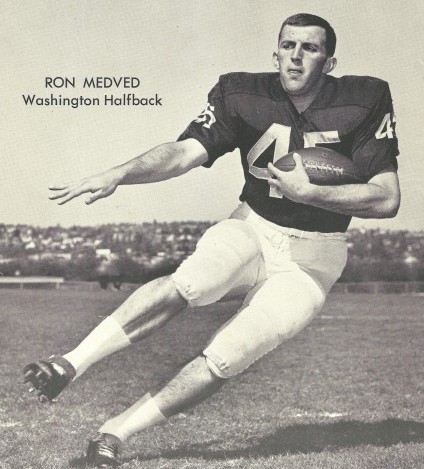
Williams finished his UW career in 1967 having made second-team All-America (Associated Press), first-team All-Pacific Coast and holding invitations to the 1966 East-West Shrine Game, 1967 Hula Bowl and 1967 Chicago Tribune All-Star Game. While his career looked very good then, it looks spectacular now given both the passage of so many years and the quality players that have passed through the program since his departure.
Football was only part of it. The year before Williams lit up UCLA, he took up the decathlon. In the early summer following his freshman year (June 13-14, 1964), Williams and UW track coach Stan Hiserman traveled to Moses Lake, where Williams entered the first decathlon of his life. He had to score 6,000 points to qualify for the Olympic trials.
I always wanted to do the decathlon, and my stimulus as a young boy was that I read about Bob Mathias, said Williams, referring to the 1948 and 1952 Olympic champion. I wanted to try different events. In the decathlon, you dont have to be great in every event, but I just wasnt very good in the pole vault. I was a 12-foot vaulter in a world of 16-footers, and thats a dramatic Achilles heel. After six events, I was right at the top, and then Id get knocked down (discus and pole vault are the seventh and eighth events on the decathlon program).”
Remarkably, given his newness, the former state hurdles champion racked up 4,114 points on the first day of the two-day, 10-event grind, winning four of the five events. After placing second in the 100 meters (10.9), he won the long jump at 22-9, the shot put at 48-7 ½, the high jump at 5-10 and the 400 meters at 40.1 to lead Dave Edstrom of the Air Force, who scored 3,942 points.
Williams didnt win the competition he and the pole vault didnt agree but scored 6,950 points (to Edstroms 7,196), 950 more than he needed to qualify for the National AAU Decathlon Championships at Walnut, CA., which would determine the 1964 U.S. Olympic team.
At Walnut, competing against the likes of eventual Olympic gold medalist C.K. Yang (1964), Bill Toomey (1968 Olympic gold medalist) and Russ Hodge (set a world decathlon record in 1966), Williams ended the first day in eighth place and wound up 14th overall among 30 competitors with 5,764 points remarkable for a college freshman, especially one competing in only his second decathlon.
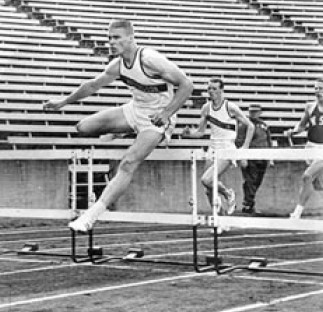
Williams became as much a fixture on the UW track team as he did on the UW football squad. As one of the teams co-captains, he generally competed in six events per meet intermediate and high hurdles, long jump and triple jump and two relay races.
Williams participated in three NCAA Championship meets, coming away with four top-seven finishes, including sixth in the long jump in 1965, fourth in the 440-yard hurdles and sixth in the 120-yard hurdles in 1966, and fifth in the 4×100 mile relay in 1967. He earned four All-America citations and scored 6.5 career points at the national meets.
(At the 1967 NCAA Championships in Provo, UT., Williams ran the third leg of the mile relay, in which Washington placed fifth to champion USC, which set a world record of 39 seconds flat with a notable quartet of Earl McCullough, Fred Kuller, O.J. Simpson and Lennox Miller).
In a sport of frequent record-breaking and ever-better times and distances, Williams remains just one of four UW track athletes from the 1950s and 1960s who are still listed on a career top 10 list in an individual event. In chronological order: Terry Tobaccos 1959 400-meter clocking of 46.66, Phil Shinnick’s 1963 long jump of 27-4, Williams 1967 110-meter hurdle time of 14.24 (converted from 120 yards), and John Hubbells 1969 shot put of 62-11 ¼.
Although he competed in the Olympic decathlon trials, three NCAA Outdoor Championships and was part of a mile relay team that established a conference record (1967), Williams top track thrill, and one of his favorite athletic moments, occurred on April 9, 1967, when the Huskies traveled to Eugene and knocked off the Ducks, ending a 13-dual meet losing streak to Oregon that dated to 1954.
It came down to the mile relay, said Williams, and we won,” setting a meet record of 3:13.9.
Thanks in large part to the fact that Williams scored 16 ½ of the UWs 76 points by winning the long (22-5 ½) and triple jumps (46-9 ½), finishing second in the intermediate hurdles (53.1), third in the high hurdles (14.5), and contributing to two (440, mile) Husky relay wins.
It was fun to beat the Ducks in Eugene, said Williams. Thats my most memorable experience in track, perhaps in my athletic career.
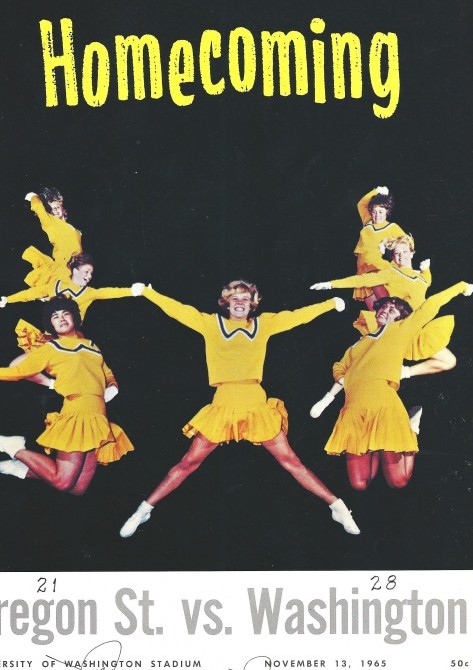
Another moment, nearly as memorable, had taken place a month earlier when Williams became the first UW football player selected in the first round of the NFL Draft since McElhenny in 1952.
Considering the numerous overtures he received prior to the draft, notably from the San Francisco 49ers and Atlanta Falcons, Williams sensed he would be a high pick. He just didnt know which team harbored the most interest, and was mildly surprised when it turned out to be the St. Louis Cardinals.
I had not talked to the Cardinals other than I met Charley Winner, their head coach, and his wife in the elevator at the hotel where I stayed for the Hula Bowl, said Williams.
In the first common draft following the 1966 NFL-AFL merger, the Cardinals selected Williams with the 16th overall pick, sandwiching him between two future Pro Football Hall of Famers, defensive end Alan Page at No. 15 (Minnesota) and guard Gene Upshaw at No. 17 (Oakland). Although Williams played tight end at Washington, the Cardinals listed him as a flanker.
Im classified as a tight end (by the UW), explained Williams. Back in the day playing under Jim Owens, I remember when I first lined up with the varsity, a three-yard split from the tackle was considered a tight end. Occasionally I would go into motion, but I was all over the board. Were splitting hairs, but in the Owens scheme of things I was classified as a tight end.
The second receiver taken in the 1967 draft, behind Michigan States Gene Washington, Williams became the first Tacoma native picked in the first round.
It was a great honor to be taken in the first round, said Williams (who had a career almost statistically identical to Washington’s.)
The Cardinals never regretted the selection. Williams scored his first NFL touchdown on Oct. 8, 1967, on a 40-yard pass from Jim Hart in a 34-24 St. Louis victory over the Vikings, and finished his rookie season with 28 receptions for 405 yards and five touchdowns, with a long scoring catch of 49 yards in a 31-23 loss to the Green Bay Packers (also caught a 48-yard TD from Hart in the same game).
Williams played seven years with the Cardinals and San Diego Chargers, finishing with 183 receptions, 2,768 yards and 25 TDs in 86 games. That constitutes the best overall statistical career by any former UW receiver in the NFL.
No ex-UW tight end has come within 500 yards of Williams NFL total (No. 2 Stevens had 2,217 through 2010). His 25 TDs are also the most scored in the NFL by a former UW receiver, wide out or tight end (Stevens ranks second with 22).
One other number stands out: Williams averaged 15.1 yards per catch during his seven NFL seasons. Among former UW receivers, No. 2 Jerome Pathon averaged 12.9 in eight years with the Colts, Saints and Falcons, and No. 3 Lonzell Hill 12.5 in four seasons with the Saints. Perhaps a better comparison is this: While Williams averaged 15.1, Ahmad Rashad (Bobby Moore), a Mount Tahoma (Tacoma) graduate and the No. 4 overall pick in the 1972 NFL Draft, averaged 13.8 during his career.
Williams has his best single NFL season in 1969, when he latched on to 59 passes for 702 yards and seven TDs. No former UW receiver ever produced a statistically comparable season. And he had some huge performances.
Among his five 100-yard receiving games: an eight-catch, 164-yard, 4-TD extravaganza 32, 13, 31 and 26 yards, all from Charley Johnson — in one of the wildest-scoring games in NFL history, a 51-42 St. Louis loss to New Orleans on Nov. 2, 1969. The contest featured six TD passes by Johnson and a matching six by Billy Kilmer of the Saints (the 12 TD passes not only broke the NFL two-team mark of 11, set by New York and Washington in 1962, it remains the NFL record).
Only one former UW receiver, Pathon, with 168 on Sept. 23, 2001 for Indianapolis, had more receiving yards in an NFL game than Williams did against the Saints.
Williams is not only the only former UW receiver to catch four TDs in an NFL game, hes the only one to ever catch as many as three, which he accomplished on Nov. 30, 1969, in a 47-10 St. Louis win over the Pittsburgh Steelers (7, 5 and 9 yards from Hart).
Fourteen of Williams 25 NFL touchdowns covered at least 30 yards. Those included a career-long 71-yarder from Hart on Nov. 10, 1968, in a 28-28 tie with Pittsburgh; a 58-yard TD from Pete Bethard on Nov. 1, 1970, in a 44-0 win over Houston; and a 53-yard TD from Hart on Oct. 27, 1968, in a 31-17 win over New Orleans.
Williams caught a career-high 10 passes for 94 yards on Nov. 23, 1969, in a 34-30 loss to Philadelphia. Only one other former UW receiver, Cam Cleeland for New Orleans against Buffalo on Dec. 27, 1998, duplicated Williams 10 single-game receptions.
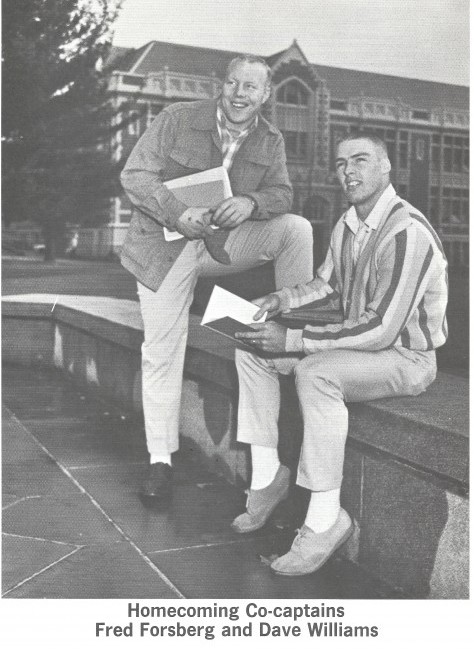
Williams spent five seasons with the Cardinals, who traded him to San Diego in 1972 for another receiver, Walker Gillette. It was in San Diego in 1973 that Williams had one of his biggest pro football thrills when he became a teammate of legendary quarterback Johnny Unitas, playing his final NFL season after a Hall of Fame career with the Colts.
Getting to know him was fun, said Williams. The Williams family loved Johnny Unitas, were big fans of Johnnys. I got to catch a couple of his passes.
After playing six games for San Diego that year, Williams signed as a free agent with the Pittsburgh Steelers, getting into one game. He was then picked up by the New York Stars of the new World Football League and subsequently traded to the Southern California Sun, coached by Hall of Fame receiver Tom Fears.
The 1974 Sun featured Utah States Tony Adams at quarterback and former UCLA stars Kermit Johnson and James McAlister at running backs, but the clubs unquestioned star and leading scorer was Williams, who caught 59 passes for 959 yards and 11 touchdowns, none more memorable than in week 3 against the Jacksonville Sharks at the Gator Bowl.
That day, Williams scored the winning touchdown on a 40-yard Hail Mary from Adams with 2:11 remaining that gave the Suns a 22-19 victory.
When the WFL collapsed following the 1975 season, Williams found himself unemployed but not for long. On Nov. 24, 1975, he became the first player to sign a contract with the Seattle Seahawks, still nine months away from playing their inaugural preseason game.
The 30-year-old free agent agreed to a three-year deal and selected jersey number 80 (he wore 80 with the Cardinals and 90 with the Huskies).
It is particularly pleasing to have an ex-Husky as our first Seahawk, said general manager John Thompson, who signed quarterback Jim Zorn and wide receiver Ahmad Rashad shortly thereafter.
At the time, the Seahawks had no idea how many tickets they would be able to sell (it turned out that they sold thousands). Taking no chances, the franchise spent every opportunity working the community. Williams assisted in the front office and made a reported 90 presentations on behalf of the Seahawks.
At that time, we (the Seahawks) didnt know if we were going to sell out or not, so I did a lot of public relations work. Part of that work was to take part in a track meet. They (the Seahawks) wanted me to run an obstacle course as part of the PR.
The obstacle course was part of an odd entertainment program presented by the International Track Association, Americas first touring company of professional track and field athletes. The ITA paid its performers on a win, place and show basis and handed out bonus checks for world records.
The first ITA meet took place at the Idaho MiniDome in March of 1973 — 10,480 fans watched it — and featured many of the American stars from recent Summer Olympics, including Jim Ryun, Bob Beamon, Randy Matson, Bob Seagren and Lee Evans.
For the crowd’s amusement, the ITA staged a couple of 440-yard relay races. The first matched teams consisting of a high jumper, a long jumper, a female sprinter and a hurdler; in the second, the team was composed of a shot putter, a vaulter, a hurdler and a sprinter.
By the time Williams participated, the ITA had added an obstacle race, one in which, in hindsight, he would have been better off avoiding. Williams popped his left knee, forcing surgery. The knee never recovered and Williams athletic career came to an end, just about the time the Seahawks sent an eighth-round draft choice to the Houston Oilers for a player no one in the Northwest had ever heard of Steve Largent.
I actually met him in the locker room before I left, said Williams. He had heard of me. I left my jersey there, my bag of shoes and all my stuff.
The Seahawks assigned Largent Williams No. 80.
I like to tell my grandkids that my jersey is in the Hall of Fame, but it just has a different name on it, Williams quipped.
Today, Williams resides in Las Vegas and has been involved in real estate property management for nearly four decades. He started his business when he played for the Chargers.
Weve lived all over, said Williams, Orange County, Chicago, Denver, Phoenix, Scottsdale and now Las Vegas. Its been a fun career. I really like it.
Williams still has family in the Northwest, including his oldest son, Jeff, and two grandchildren, who reside in Seattle. He isnt much of an NFL TV fan anymore, but follows the Huskies closely and attends one or two games a year (he will drive to Salt Lake City to watch the Huskies play Utah Oct. 1).
Considering the career Williams had, both in football and track, it’s remarkable that he has not yet been inducted into the Husky Hall of Fame, or the State of Washington Sports Hall of Fame, for that matter. He’s 66 years old now, and it’s still not too late.
——————————————-
Check out David Eskenazis Wayback Machine Archive. David can be reached at (206) 441-1900, or at seattlesportshistory@gmail.com
35 Comments
Was there for the opener in 1965. I was Sophmore at Lincoln High School then. Huskies were the only game in town. All the guys had Air Horns, it was noisy when the Huskies played well. They had gone to the Rose Bowl the last 3 outf of 5 years and people thought Jim Owens walked on water over to his home in Laurelhurst.
Great memories of great teams and players back then.
HIS BROTHER JOE WAS BETTER…HIS OTHER BROTHER JERRY WASNT BAD EITHER
I agree. His brother Joe WAS better. Loved watching him run the 400 when I was in junior high.
Was there for the opener in 1965. I was Sophmore at Lincoln High School then. Huskies were the only game in town. All the guys had Air Horns, it was noisy when the Huskies played well. They had gone to the Rose Bowl the last 3 outf of 5 years and people thought Jim Owens walked on water over to his home in Laurelhurst.
Great memories of great teams and players back then.
HIS BROTHER JOE WAS BETTER…HIS OTHER BROTHER JERRY WASNT BAD EITHER
I agree. His brother Joe WAS better. Loved watching him run the 400 when I was in junior high.
I hope that the Huskies’ current TE, Jenkins breaks all of Dave Williams’s records. But he doesn’t seem to be getting many balls thrown his way yet. Probably having a few route running and timing problems ala Golden Tate.
But this old Husky stuff is cool. Dave Williams should be honored by the school officially.
I hope that the Huskies’ current TE, Jenkins breaks all of Dave Williams’s records. But he doesn’t seem to be getting many balls thrown his way yet. Probably having a few route running and timing problems ala Golden Tate.
But this old Husky stuff is cool. Dave Williams should be honored by the school officially.
I’ve always wondered why Sonny Sixkiller never had a pro career.
I’ve always wondered why Sonny Sixkiller never had a pro career.
I had the opportunity to watch a game featuring Heinrich and McElhenny when my older was at the U. He somehow snuck me in to the student section. My favoite years though were 1960-61 when the UW beat Minnesota and Wisconsin back to back in the Rose Bowl. In those years, the Pac 8 were always underdogs to the big ten.
I had the opportunity to watch a game featuring Heinrich and McElhenny when my older was at the U. He somehow snuck me in to the student section. My favoite years though were 1960-61 when the UW beat Minnesota and Wisconsin back to back in the Rose Bowl. In those years, the Pac 8 were always underdogs to the big ten.
He was a lefty with a quick release and a strong arm, but had accuracy problems passing while rolling to his left or right — I can’t remember which — I read about it in the P.I. after he was cut from the LA Rams, over 35 years ago. He was relatively small in stature compared to most pro quarterbacks, even back in those days. I think he played briefly in the defunct World Football League.
This was about Sonny Sixkiller, a reply to Bayviewherb. I screwed up and clicked the wrong field.
He was a lefty with a quick release and a strong arm, but had accuracy problems passing while rolling to his left or right — I can’t remember which — I read about it in the P.I. after he was cut from the LA Rams, over 35 years ago. He was relatively small in stature compared to most pro quarterbacks, even back in those days. I think he played briefly in the defunct World Football League.
This was about Sonny Sixkiller, a reply to Bayviewherb. I screwed up and clicked the wrong field.
He also scored 4 touchdown receptions in an NFL game, all in the first half! He played for the St. Louis Cardinals then and did it against the Tom Fears coached New Orleans Saints. It’s likely that not many NFL top scorers ever scored 4 TD’s in one half. Dave later played for Tom Fears with the California Sun.
He also scored 4 touchdown receptions in an NFL game, all in the first half! He played for the St. Louis Cardinals then and did it against the Tom Fears coached New Orleans Saints. It’s likely that not many NFL top scorers ever scored 4 TD’s in one half. Dave later played for Tom Fears with the California Sun.
My memories were of him running past the defenders waving and the ball thrown short. Why did Jim Owens not let him start his final game against WSU? Owens statue should be removed and replaced by a Don James statue.
My memories were of him running past the defenders waving and the ball thrown short. Why did Jim Owens not let him start his final game against WSU? Owens statue should be removed and replaced by a Don James statue.
Never have I been so torn for a team… in support of the the guys on the field (coaches/manager included), yet in complete distain of higher ups. What a quandary… What do we do? And I’m so disappointed I wasn’t there because, had the organization had their (rhymes with spit) together, a sold-out Safeco Field would have sent this whole game into orbit… and I would most like been among them. Instead, I’m sitting here thumbing about hours later. Bittersweet. No, sweetbitter.
When I lived in So. Cal during the 60’s I would attend every game Koufax pitched at home. I sa him pitch no-hitters, strike out 18 routinely and for a Dodger tream that had lost most of their veterans to retirement using darn near the entire Spokane roster to fill in. Koufax during his peak would win 1-0 or 2-1 most games and with just three days rest between starts. He seldom needed relief, going complete game most of the time.
Today, I may have seen a pticher that finally measured up to Sandy.
I grew up in SoCal and only got to see Sandy once, in 1966. Unfortunately he was yanked in the 7th in a loss to Pittsburgh. After reading ‘A Lefty’s Legacy’ and learning of the physical toll he was enduring particularly in the ’66 season, I cherish even that memory. That book is a great resource for seeing how far sports medicine has evolved. If Koufax and Drysdale could have pitched with today’s ever-evolving knowledge and precaution, there’s no telling what they could have done.
On an aside, I’ve been very critical of the Ms senior management for their relations with the community but no one from the Dodger organization attended Koufax’s retirement press conference which was held in a hotel instead of Dodger Stadium. Insensitive ownership takes many forms I guess.
Big fan of Sandy’s too. I heard toe echo yesterday.
I would feel better if management announced a long contract extension for the king. We have lost so many players that could field an all star roster. It’s about time we kept the winners and cut the losers like Chone Figgins. We have three catchers. That’s one more than we need. Hopefully, the team will thank Olivo and release him.Looking back at a potentially great player in Center Fielder **** that has been on injured reserve for the last two years. He’s been gone so long I can’t spit out his name. It’s time for him to either look for another team or enter a nursing home.
Management would like a long-term deal, but Felix’s agent would be an idiot if he took it right now. Felix could win another Cy Young, and at 27, teams would throw fortunes at the Mariners. Not saying a trade should happen, hoping it won’t, but this team show little capacity to build any other way.
I was at the park yesterday and was among those sharing the wonderful moment. Thanks for this account.
Felix was perfect but your account was not—in one minor respect. Sam Fuld, the first Ray hitter, flied out deep to right field to Eric Thames, not to Robinson in left. Your perfect game thus was lost because of a piddly error. Justin Smoak also made a nifty save when he dug a low throw out of the dirt at first base, thus keeping another Ray runner off the bases.
The game, and the game the night before, when the Ms rallied in the ninth to beat the league’s best relief pitcher, could provide some needed momentum to this young team going into the final stretch of the season.
May Felix stay whole, happy, and in Seattle for the remainder of this baseball life.
I believe the combined no-hitter was on a Friday night. But point well taken. I remember in the 2000 playoffs when the Ms swept the White Sox, the WS were saying they couldn’t see the ball at all and the games were played in the day.
There is something about the brightness of the sun this far north . . . but lacking my degree from Jeff Renner University, I’ll just throw it out there to add another log upon the Safeco fire.
I must say that the 2001 team must have had a lot of cloudy days.
Yes. It’s still an unfair part for hitters, and I think ownership will cut some wood after the season.
You know, soldiers find a way to love their brethren while having contempt for the govt. Think of it that way.
Thanks Art. I’ll take that to my Ms fan PTSD support group meeting this afternoon.
Hold that ticket. Five years from now, a million people will say they were there.
What a performance for the ages. Except for that fly ball from Fuld at the top of the first, Felix toyed with the Rays like a cat toys with a catnip ball. His pitches were just jumping and he showed total command out there…it’s sometimes easy to forget that with all the great stuff he has naturally at his disposal, Felix Hernandez knows HOW to pitch (much like Jamie Moyer used to). I’m prejudiced, but this one was an all-timer because it wasn’t about luck. It was about total dominance of a solid major league team.
I woke up over here at Kunsan Air Base in South Korea and turned on the American Forces Network sports channel. Pardon the Interruption was on then all of the sudden Safeco Field appeared. My first thought was oh man, something bad is happening to the Mariners again. Dave Sims’ voice came on and began talking about King Felix heading into the 9th with a perfect game and I almost dropped my cereal. It was incredible to watch live and congratulations to the almost 22K there in person.
I have only been to Safeco twice since it opened, an early April game in 2008 and the last game of the season last year. I hope to one day enjoy it during a day game in the summer perhaps even sitting in the King’s Court.