

By David Eskenazi and Steve Rudman
Used in a sporting context, no single word gets bludgeoned more often than classic. Still, there are times when a game or an event so transcends the routine that no other description will suffice.
The October 8, 1995, Kingdome thriller in which Edgar Martinez immortalized himself by roping the most famous double in Mariners history is an obvious pinnacle moment. So was and is the 1992 Apple Cup in Pullman, in which Drew Bledsoe won the day against Mark Brunell in a blizzard for the books. And even in the worst of times, Washington football fans can always conjure up the 1994 Whammy in Miami.
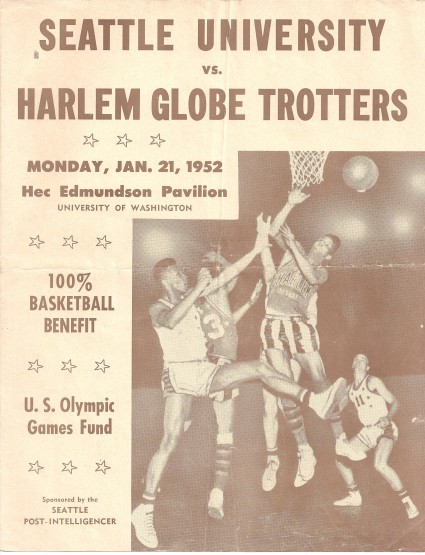
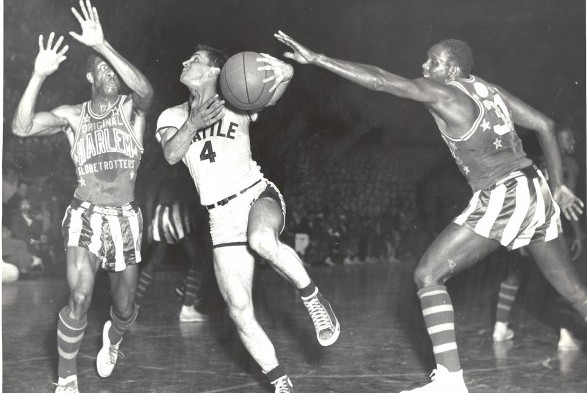
Long before any of the above carried meaning or memory, 12,500 basketball fans packed Hec Edmundson Pavilion on the University of Washington campus to witness a hastily arranged charity basketball game. In terms of spectacle and outcome, what they experienced on the night of Jan. 21, 1952, left them in awe and remains one of Seattle’s most improbable and delightful sports moments.
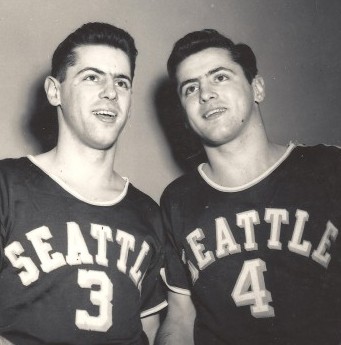
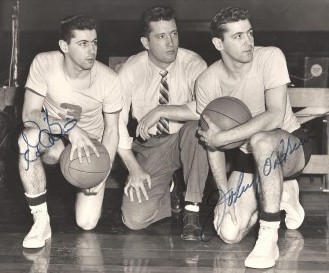
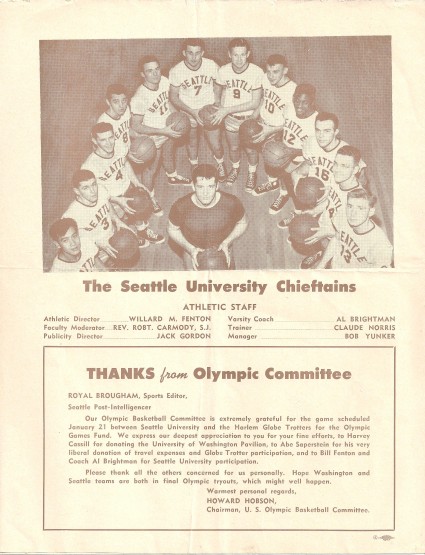
The script called for the Harlem Globetrotters to amuse the amassed with their portfolio of comedic routines while making short work of the scheduled fodder, the Seattle University Chieftains. Instead, the slapstick ceased when Seattle U., led by its 5-9 “Gold Dust Twins”, Johnny and Eddie O’Brien, slapped back.
Ironically, the Chieftains were not even supposed to be in the building.
Five days prior to tipoff, Seattle Post-Intelligencer columnist Royal Brougham, a 35-year newspaper icon who would endure until 1978 (he toppled over for good in the Kingdome pressbox following a spree of hot dog munching during a Seahawks game), received a telephone call from Howard Hobson, a United States Olympic committee member and the head basketball coach at Yale.
Hobson explained to Brougham that the USOC needed to raise funds to help support Americas effort in the upcoming Summer Olympic Games in Helsinki, Finland. To that end, Abe Sapersteins Harlem Globetrotters had agreed to play three fund-raising contests against college teams in the East (Army), Midwest (Notre Dame) and West. Hobson asked Brougham if could create the West matchup.
What with agents, lawyers, TV, licensing agreements, national advertisers, and olios of 10 percenters, none of this would be possible today, but Brougham was as much power broker and myth maker in his heyday as he was sports columnist. He told Hobson that he could and would create the matchup, informing the USOC official that the Post-Intelligencer would sponsor the charity affair.
According to former P-I reporter Dan Raleys 50th-anniversary account, Brougham also took brazen liberties with other people’s property. Brougham promised Hobson and the USOC the use of the University of Washington’s Hec Edmundson Pavilion — without consulting the UW athletic director, can-do Harvey Cassill, who was out of town on business and couldnt be reached.
“Brougham announced it (the game) in the paper the next day,” former Seattle U. sports information director Bill Sears told Raley. “Cassill didn’t know anything about it until he got off the train and read it. He was incensed. But nobody was going to buck Brougham. He was Mr. Big in those days.”
Indeed. Brougham had been the leading voice in Seattle sports ever since he covered the Seattle Metropolitans’ 1917 Stanley Cup triumph. And he could summon the likes of Jack Dempsey and Jesse Owens to town with a phone call. Arranging a basketball game for Brougham was something he could accomplish at lunch.
The University of Washington was the obvious choice as the Globetrotters opponent. But coach Tippy Dye, whose Huskies had just risen to No. 8 in the Associated Press rankings, vetoed the idea (Cassill probably had a say-so in the nyet as well), citing too many injuries, although no Seattle newspapers had reported any significant injuries to UW players. Dye’s decision might have been influenced by his own squeamishness over the mockery the Globetrotters might inflict upon his Huskies.
With Washington unavailable, coach Al Brightmans Chieftains stepped up, a willing substitute (the Chieftains were en route to making an appearance in the National Invitation Tournament, an event pretty much on par with the NCAA Tournament in 1952).
“We didn’t learn learn until Thursday (the Globetrotters game was set for the following Monday) that we would be playing the Globetrotters,” Johnny said. “All Brightman said was that were going to play the Globetrotters, and not much else. Unless we were playing, we normally had the weekend off. But Brightman called practices for Saturday and Sunday.”
“Those days, we’d play anyone,” Eddie O’Brien, Seattle Universitys point guard, told Raley.
The Globetrotters werent just anyone. With the NBA not close to being fully integrated (Earl Lloyd of the Washington Capitols had become the leagues first black player only two years earlier, on Oct. 31, 1950, against the Rochester Royals), Saperstein still had access to some of the nation’s best black athletes, although the NBA had made significant strides (Saperstein would later employ the likes of Sweetwater Clifton, Wilt Chamberlain and Connie Hawkins, and baseball players Lou Brock, Bob Gibson and Ferguson Jenkins to play for the Trotters).
The Trotters had whipped a number of professional teams in serious contests, including the fabled, all-black New York Rens. Between 1948-58, the Minneapolis Lakers and Trotters met eight times with no jokes allowed. The Globetrotters won the first two — Arch Ward, the venerable Chicago sportswriter, called the Globetrotters “the best team in the world” in 1948 — and dropped the final six, holding their own in each except one, a 24-point loss in 1952. The Trotters’ 1948 win became a hallmark in pro basketball history as the all-black Trotters not only proved to be on equal footing with the all-white Lakers, but their victory created momentum for erasing the color line in the sport. In addition to their games against other professionals, the Globetrotters routinely dispatched very good college teams by large margins.
The Globetrotters that would play Seattle University featured a number of veterans who had gone head-to-head with the Lakers. Master dribbler Marques Haynes had influenced and inspired Bob Cousy. Reese Goose Tatum, after playing minor league baseball with Satchel Paige, joined the Trotters and invented the sky hook, a shot Kareem Abdul-Jabbar would make famous. Tatum had scored 13 points against the Lakers 19 days before playing Seattle University.
Although Haynes couldnt make the Hec Ed game due to a military obligation, no one had much doubt not even Chieftains players — that the Trotters would simply toy with the tots from Seattle U. They were taller, stronger, more seasoned and athletic, and had weathered far stronger competition.
“I remember when (coach) Al Brightman told us we were going to play them, we thought he was kind of off his rocker,” Chieftains starting center Bill Higlin told Raley. “I really thought they were going to make donkeys out of us.”
“The Globetrotters played a strict man-to-man, so we thought that would work good for us,” said Johnny. “But they were a good outside-shooting team, so there was a bit of apprehension over that.”
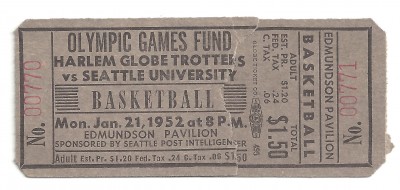
While the Seattle Times passed on joining the pre-game tub-thump (it was, after all, a P-I promotion), Brougham shilled it feverishly, the main reason why all 12,500 tickets, priced at $1.50 each, sold in 48 hours.
Shortly before 8 p.m., the Globetrotters took the floor accompanied by the strains of Sweet Georgia Brown, and began their fancy passing, dribbling and juggling schticks. Then buxom blonde actress Joan Caulfield, who had played opposite Claude Rains in The Unsuspected (1947) and would later appear in TV programs such as Cheyenne, Baretta and Murder, She Wrote, sashayed to mid-court to provide the ceremonial opening tip with a little pizzazz. She was, intimated Johnny, quite the looker.
“She threw the ball up and nobody moved,” Johnny said. “We were all just staring at her.”
Most times, Saperstein instructed the Trotters to play semi-seriously until they had a big lead, at which point they would return to their showboating. That had worked successfully about 93 percent of the time in more than 3,500 Globetrotter laughers, and Saperstein saw no reason to change his tactics against Seattle U, the longest of longshots. But on this night, the Trotters never had a chance to send in the clowns, much less keep them in.
Eddie OBrien explained to Raley what happened: “Before the game, we were under the north stands and the Globetrotters were on the other side. Saperstein came over, looked at us and said, ‘Is this all you got?’ That’s where we won the ballgame.”
“Saperstein kind of made us mad with that statement,” said Johnny. “Later, Saperstein told me, ‘Me and my big mouth.'”
Born on Dec. 11, 1930, in South Amboy, NJ, the OBrien twins came to Seattle University as a result of Brightmans recruiting efforts. A former college star out of California, Brightman had spent the 1946-47 season with the Boston Celtics (first Celtic to score 20 points in a game) and later served as a player/coach with the Pacific Coast Professional Basketball Leagues Seattle Athletics (1947-48). He had been head coach at Seattle University since 1948 (and would continue through 1956).
Averaging nearly 27 points per game, Johnny hit three baskets as the Chieftains grabbed an 8-2 lead in the first three minutes.
“With my first three shots, I hit a right-handed hook, then a left-handed hook, and a jumper,” said Johnny. “After that, they didn’t know what I was going to do.”
Seattle U. built a 46-36 lead at the end of two quarters (college rules were used and college teams played quarters in those days). A hastily arranged intermission entertainment ran long because renowned trumpeter Louis Armstrong, in Seattle for an unrelated nightclub gig, was busy wowing the crowd. That irked Brightman, who didnt want his teams first-half momentum stopped by a dragged-out halftime show.
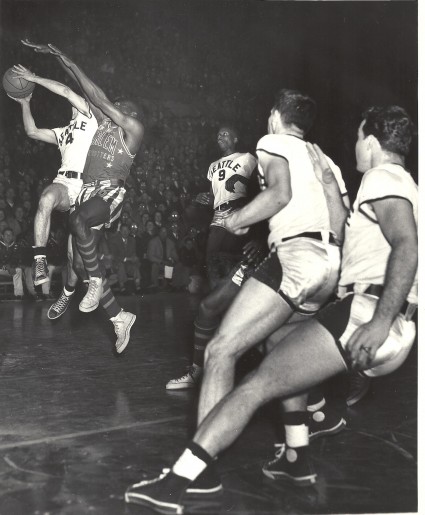
Sure enough, the Trotters stopped it, in part because Johnny suffered a twisted ankle and sat out a good portion of the quarter. The Trotters pulled within three points at 49-46 midway through the third, tied it at 53, then went ahead 55-54. Eddie OBrien sneaked in for a basket and Johnny made a free throw, sparking a run that had Seattle U. leading 65-59 at the end of three.
At Saperstein’s insistence, the game was played with a six foul-out rule and two players drew the maximum, Seattle’s Higlin (only Seattle U. player ever to collect six fouls in a game) and Sam Wheeler of the Globetrotters. No edge to either team there.
All of the Trotters, from Goose Tatum, the fabled Babe Pressley (MVP of the 1940 World Professional Tournament) and Bill Brown on down, took turns trying to thwart the elusive Johnny OBrien. Although listed as a guard, he mainly played center, where he continually flummoxed Tatum, seven inches taller.
Shooting hooks and layups with either hand and with astonishing touch, Johnny pushed Seattle U. out to a 10-point advantage in the fourth quarter. But the Trotters rallied, cutting Seattle’s margin to two points, 83-81, with nine seconds showing. At that juncture, the referees called a jump ball, and the Globetrotters called timeout, a big mistake. They had no timeouts remaining, a technical foul. Johnny drained the free throw for his 43rd point, breaking Jack Nichols Pavilion record of 39 set in 1948 against Idaho, and making Tatums 23 points look pale by comparison.
“It really wasn’t that hard,” said Johnny.
With Eddie OBrien adding 13 points and Wayne Sanford 14 rebounds, Seattle U. prevailed 84-81, prompting forward Jack Doherty, the last Seattle U. player to touch the ball, to hurl it into the crowd, a fitting capper for one of the most improbable upsets in college basketball history. Many of the 12,500 in attendance rushed the court.
“There were so many people on the floor that it took us about 20 minutes to get to our locker room,” said Johnny.
By that time, a miffed Saperstein had made up his mind to cancel the Trotters appearances in the two other USOC fund-raising games against Army and Notre Dame. And it did not take Saperstein long to ensure that the Globetrotters would never be subjected to a similar embarrassment.
A few months after Seattle U.s victory, Saperstein asked Louis Red Klotz, a Villanova grad and a member of the original Baltimore Bullets (1947-48), to form a team to accompany the Globetrotters on their tours. Klotzs club became the Washington Generals, and they provided the Trotters with deliberately ineffective, and often inept, competition for the next 40 years.
In the two months following Seattle U.s upset of the Globetrotters, Johnny achieved this distinguishing statistic: he became the first player in college basketball history to score 1,000 points in a season, tallying 1,051.
In part because of the headline-generating upset, Seattle University not only received coverage in national newspapers and magazines (the New York Times ran an account of the game), but an invitation to the 1953 NCAA Tournament, not long after Johnny OBrien had been named first-team All-America along with Ernie Beck of Pennsylvania, Walter Dukes of Seton Hall, Tom Gola of LaSalle and, of course, Bob Houbregs of Washington.
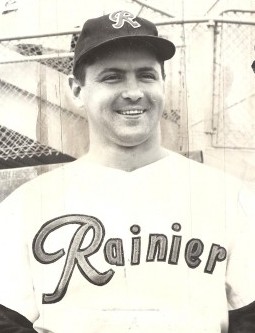
As an encore to his 1,051-point season in 1951-52, Johnny followed up with 916 in 1952-53 to finish his collegiate career with 2,733 points. Among his most memorable senior moments: Seattle U.’s 102-101 victory over New York University at Madison Square Garden in December of 1952, the first time two college teams had both scored more than 100 points in a game.
In their three years at Seattle U., Johnny and Eddie helped Seattle University to a 90-17 record, including berths in the 1951 National Catholic Tournament, the 1952 National Invitational Tournament, and the 1953 NCAA Tournament.
On March 10, 1953, Johnny and Eddie combined for 63 points, 42 by Johnny, in an 88-77 win over Idaho State in the first round of the NCAA Tournament played, ironically, at Hec Edmundson Pavilion. Three days later, the Chieftains met an inspired Houbregs and the UW in a West Regional semifinal in Corvallis, OR, and lost 92-70. Johnny went for 25 and Eddie for eight, but Houbregs, the 1953 NCAA Player of the Year, dropped in a tournament-record 45.
While that marked the end of the story for the OBriens at Seattle University, it did not end their athletic careers.
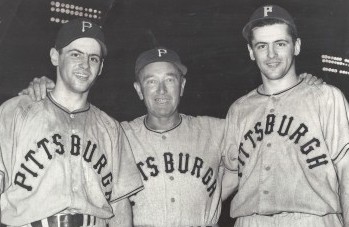
Six days after losing to Washington, on March 19, Johnny and Eddie signed in tandem with the Pittsburgh Pirates as amateur free agents, aka bonus babies.” They immediately headed for Pittsburgh’s spring training complex in Havana, Cuba.
Johnny made his major league debut on April 19, as a pinch hitter against the Brooklyn Dodgers. Eddie made his on April 25 as a pinch runner against Philadelphia (scored). On May 10, in the second game of a doubleheader against the New York Giants at the Polo Grounds, Johnny and Eddie became the first twins in major league history to play for the same team in the same game, Johnny as Pittsburghs second baseman, Eddie as a pinch runner. They subsequently also became one of only four brother combinations to play second base/shortstop on the same major league club.
Johnny played six major league seasons, including four with the Pirates, one with the St. Louis Cardinals and one with the Milwaukee Braves. He had a career .250 batting average. He also pitched in 25 games, collecting his only win on July 3, 1956, a 6-5 Pittsburgh decision over Philadelphia. He had a four-hit day on July 7, 1955 (Pittsburgh right fielder Roberto Clemente went 0-for-4), at Forbes Field in a 4-3 loss to the Brooklyn Dodgers. Johnny finished his career with the 1960 Seattle Rainiers, batting .309 in 73 games.
Eddie had a five-year career, all with the Pirates. He batted .236 and had his best hitting day on June 16, 1953, when he delivered three hits in Pittsburghs 6-5 win over the Cubs at Wrigley Field.
After their baseball careers, Eddie served as athletic director at Seattle U. from 1958-60, coached the Seattle Rainiers and, with Johnny, operated a baseball school. Johnny went into politics, serving several terms as King County Commissioner, and later worked as a Kingdome manager. Johnny also spent time as Keith Jackson’s partner on Seattle U. radio broadcasts.
One night during a game broadcast, a bag-toting fan approached Johnny and asked if he remembered seeing Jack Doherty hurl the ball into the stands after the Chieftains defeated the Globetrotters all those years ago. Johnny did. The fan pulled the basketball out of the bag and gave it to Johnny.
“Me and my big mouth. I made the mistake of telling Royal Brougham about this,” said Johnny. “Well, he wanted me to loan the ball to his museum (Brougham kept about 80 years worth of artifacts in his third-floor P-I office, later moving the collection to the “Royal Brougham Kingdome Museum).”
After medicos carted Brougham out of the Kingdome pressbox in 1978, and with an assist from the facility’s publicity director, Carol Keaton, Johnny got the ball back, a permanent reminder of the “classic” that forever turned the O’Brien twins into civic icons.
“Jan. 21, 1952,” said Johnny, the date rolling immediately off his tongue. “A lot of time has passed. Now, I’ve got silver in my hair, gold in my teeth, titanium in my knee and lead in my butt.”
Seattle U. 84, Harlem Globetrotters 81 / Jan. 21, 1952
| Seattle U. | FG | FT | PF | Pts. |
|---|---|---|---|---|
| Wayne Sanford | 4 | 4 | 5 | 12 |
| Jack Doherty, f | 4 | 0 | 5 | 8 |
| Bill Higlin, c | 1 | 0 | 6 | 2 |
| Johnny O’Brien, g | 16 | 11 | 3 | 43 |
| Eddie O’Brien, g | 6 | 1 | 3 | 13 |
| Ray Moscatel, f | 0 | 2 | 2 | 2 |
| Les Whittles, f | 2 | 0 | 3 | 4 |
| Totals | 33 | 18 | 24 | 84 |
| Globetrotters | FG | FT | PF | Pts. |
| Ermer Robinson, f | 7 | 2 | 5 | 16 |
| William Wilson, f | 3 | 1 | 5 | 7 |
| Goose Tatum, c | 10 | 3 | 5 | 23 |
| Babe Pressley, g | 0 | 1 | 3 | 1 |
| Sam Wheeler, g | 4 | 1 | 6 | 9 |
| Harry Singleton, c-f | 2 | 0 | 0 | 4 |
| Bobby Milton, c | 5 | 0 | 5 | 10 |
| Bill Brown, c | 2 | 0 | 5 | 4 |
| Josh Grider, g | 3 | 1 | 3 | 7 |
| Totals | 36 | 9 | 37 | 81 |
——————
Many of the historic images published on Sportspress Northwest are provided by resident Northwest sports history aficionado David Eskenazi, who writes The Wayback Machine every Tuesday. Check out Davids Wayback Machine Archive. David can be reached at (206) 441-1900, or at the following e-mail address: seattlesportshistory@gmail.com
(Wayback Machine is published every Tuesday as part of Sportspress Northwests package of home-page features collectively titled, The Rotation.)
33 Comments
A lot of time has passed. Now, Ive got silver in my hair, gold in my teeth, titanium in my knee and lead in my butt.
Great quote.
Very well researched. Have to wonder if it is the most encompassing account ever written.
I covered that game for United Press (later UPI) and knew the O’Brien twins and was a friend of Al Brightman and watched them rise to national prominence. Great story,l but left out that the O’Brien twins were adopted by the priest and presoident of Seattle U. as they were orphans. That was a landmark maneuver in the art of recruiting.
Enjoyed the reprise very, very much.
Bill: Thanks so much for responding. I wish I could have seen that game. Thanks for visiting our web site.
Comprehensive, fascinating, absorbing. A tour de force. Great work. That story about the adoption of the O’Brien twins is not apocryphal?
Thanks for commenting, John. We appreciate you stopping by the site and visiting.
” Oregons longest winning streak is eight games, from 1938-39.”
Did the two teams play anyone else during those 2 years?
Ironic how I just read the story about Terrence Ross and Tony Wroten’s chances of leaving school early before reading this one. I’ve got a lot of respect for Darnell Gant because he stuck it out, grew up and is earning his degree. You know, like more players used to.
Somehow, the light bulb went on over Darnell’s head about where his long-term future lay. He’s fortunate. In or out of sports, it doesn’t happen often, or soon enough.
While media, advertising, agents and fans pester kids about chasing the dream, few teach them fairly and honestly about options. Give credit to Romar: Kids trust him to be honest, and he knows who is a pro talent, and who isn’t.
Grover, I’m not sure most Mariner fans agree with you on Safeco Field. I love the ballpark the way it is. All your points are rendered moot if the Mariners win. We’re sick of losing and we’re sick of teams that aren’t even entertaining. Fix that, problem solved. Also, your examples of Husky Stadium and Qwest (Century Link) are off-base as well, since football can be played in any weather. Baseball cannot, and the first three months of baseball season here happen to be the wettest of the year.
Well, you are completely wrong about the weather. November, December, January and February are far wetter than April, May or June. The six months of baseball season get only 25% of the yearly rainfall in Seattle. The six months from October through March get 75% of Seattle’s yearly rainfall. So, actually, Seattle is uniquely qualified to NOT need a roof on a baseball park. Most of the MLB cities in the Midwest and East get more rainfall during baseball season than in the other six months of the year.
The retractable roof on Safeco Field is an utter waste of money, and a hideously ugly eyesore. And it made necessary the very high stadium wall beyond left field which is why nobody has ever hit a home run all the way out of Safeco Field — that huge structure which holds the rails for the roof is too high and too far from home plate for any home run to carry over.
Safeco Field is just a really tragic wasted opportunity. The M’s needed a ballpark which would draw fans even when the team stinks, which is most of their history. Safeco Field is not that park.
Moving in the fences is a silly, desperate idea that should never happen. The M’s have had problems hitting home runs mostly due to the fact that the majority of the players they’ve had for the past decade have been capable of achieving only slightly above the lowest levels of suck. Its hard to build a serious team with an upper management philosophy of primarily signing players whose names can be turned into cute nicknames that end in a long “E” sound. The dimensions of the stadium are the reason it is such a pitcher-friendly park. You win with pitching, defense, and manufacturing runs. The problem is that for more than ten years the upper management has acquiesced to Ichiro at every opportunity, while meddling, tinkering, and manipulating their merry-go-round of general managers into signing and promoting position players that were not only not suited to the ballpark, but consisted of an acrid and bizarre mix of cantankerous has-beens in their last days and milquetoast Dudley Do-Rights that had no business being on a major league roster in the first place. It appears, for the most part, that Choward Lincstrong is stepping aside and letting Jack actually run the show now, all by himself. I have pretty much been ignoring the M’s since about 2003 (I refuse to passionately follow something that clearly has no hope) but this season has me more intrigued than any in a long, long time. Now, if Lincstrong can just stay out of the way….
Oh, and obviously, moving in the fences would affect the opposition equally. BOTH teams
will just end up hitting more homers, but that won’t necessarily equate to more
wins for the M’s.
Has anyone here commented on Art’s story? I feel as if I somehow got transferred to another thread. But, no. This comments section is directly below an article by Art Thiel on what a strange ownership situation exists with the Mariners. It’s odd history and possibly a case that MLB insiders have strong reasons to hate the Mariners and Seattle. I found it an interesting subject well written. Not necessarily more interesting than a debate regarding Safeco Field. For which I have an opinion, but it’s not strongly held. I would say the guy advocating no roof convinced me more than those in support of a roof. Anyone who would drive more than three hours to see a game on a regular basis is nuts in my opinion anyway. So getting rained out would become part of the charm? Give me a couch, and my favorite cold beverage and a 50 inch screen and I am able to see the game more clearly than going to the stadium. Plus, the refrigerator is close by.
@375d0564ec128112ead140094094c1d4:disqus , I think your last sentence could be said about most sports these days for fans. This is a major reason why teams aren’t making as much money anymore and why television deals are becoming more lucrative. I’m not saying I agree with you either way, as I love going to any baseball field, but would rather watch a football game on TV with friends and some good food.
And like you, I forgot this was a story about Japan for a moment.
-Tim
Thank you for this succinct story that in a large way speaks to the mystery of the Hiroshi Yamauchi – Mariners ownership era, especially with regard to his audaciousness to influence the acquisition of Ichiro and others. Like the Steinbrenner of Japan. I wonder how Lou Pinella felt about it early that first year with Ichiro? Was Ichiro “forced” on the team? I can’t imagine that Lou was initially ecstatic.
Yes, football IS a physical game and always has been. Hell, no less than Teddy Roosevelt wanted to ban it because of the level of violence. No argument that a large part of its appeal is the physical nature of the game…it’s a contact sport.
Most football fans don’t want to see the physical nature of the sport taken out of it, but is the entertainment from on-field violence worth a Mike Webster suffering dementia before dying at age 50, a Darryl Stingley ending up in a wheelchair for 28 years before dying at 55 or a Dave Duerson committing suicide at 50 because of their football injuries? To me, it isn’t…these guys are human beings.
What appeals to me about football is the field generalship. The battle of wits. The violence less so. I have had doubts about the future of football for years now. If I was a parent, I would not allow my children to play it. Period. That attitude will only grow. Unless the changes which have been made alleviate the permanent damage which gets done – to the head. We already knew about the knees and shoulders and other body parts which give retired players pain for the remainder of their lives. I enjoy the heck out of football, but its future is in doubt.
Absolutely NO WAY should they take a QB!!! They need some new studs on D fense, and some depth on offense in the later rounds. Pick a QB next year.
Matt Flynn should be as good as any quarterback the Hawks could pick at number 12 so, no, there’s no need to pick another one in the first round. Flynn will be fine, Jackson should transition to one of the better backup QBs in the NFL and Josh Portis is nice to have on-board as a project (although I’m okay with picking another quarterback after the second round).
A pass rusher is absolutely needed more.
I think you go after the best football player available, regardless of position. If that means Tannehill, and he’s available, you grab him. Personally, I think Luke Kuechly is that guy.
Interesting pick. Pretty high for a player who was considered to be disappointing last season. But then Aaron Curry was supposed to be a lock and that didn’t happen. At least the Hawks won’t plan on converting him to a safety like they did with Michael Boulware.
Disapointing Pick. A project. The Team needed an impact player now, not a part time player, not in the first round.
Can’t imagine the Ms making such a daring pick. On the contrary, some scouting director would have been fired.
How are those Mariners doing, by the way? Playing it safe hasn’t produced much in the last decade.
Very Cool.
Doesn’t the phrase “toe-to-toe” at least imply physical contact and, uhh, tackling? The Alamo Bowl marked the first ESPN broadcast of a two-hand-touch football game. You see more defense in an Orlando Predators-Tampa Bay Storm AFL game.
Price SMOKED RGIII – not even close.
I am a biographer of Branch Rickey – a Catholic Bible signed by members of the 1953 Pittsburgh Pirates recently resurfaced in Sacramento. It’s a mystery to all – I was wondering if either of the O’Brien twins knew anything of it. Thanks for any info. Your story on the victory over the Globetrotters was wonderful.