

Its always dangerous when politicians strain for sports analogies to explain episodes of legislation. We hear about horse races, buzzer-beaters, home runs vs. singles, big scores, Hail Marys . . . the urge is powerful to channel Moe and line up everyone shoulder to shoulder for a Stooge slap.
But county council member Pete von Reichbauer found one Monday that was a little outdoorsy, but fairly apt.
Weve reached Camp Muir, he said, referring to the overnight stop at the 10,000-foot level for climbers of Mt. Rainier. If youve ever had the experience, making Muir seems like an accomplishment until its realized the final 4,410 feet to the summit is all up, all cold and no fun.
Muir is the metaphorical location at the moment for Chris Hansens project building a basketball/hockey arena is Sodo. He just finished the easy part.
What happened Monday were the formalities after the completion of negotiations with Hansen a few weeks ago — the King County Council voting 9-0 and the Seattle City Council voting 7-2 to approve the improved agreement with Hansen for a public-private partnership — a deal that has won some acclaim for its financial virtues, but criticism for the arenas site adjacent to Safeco Field and near the doorstep to the Port of Seattle.
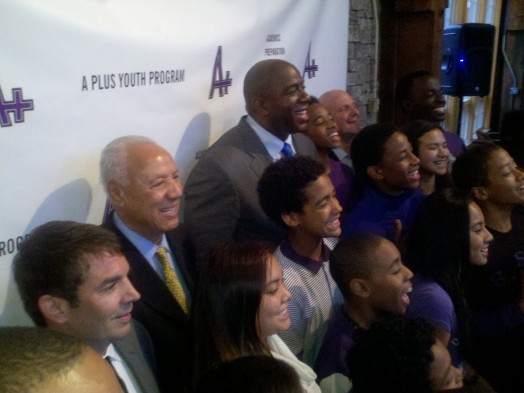
Hansen, Mayor Mike McGinn and Executive Dow Constantine will sign the deal at 1:30 p.m. Tuesday at the Rainier Vista Boys and Girls Club. Another formality.
The formalities were overshadowed by what many familiar with this project anticipated would be an inevitability: A lawsuit. Local 19 of the International Longshore and Warehouse Union, the people who load and unload cargo at the port, is taking up the cudgel.
Union members said at a press conference Monday that they are planning to file litigation in King County Superior Court, perhaps as soon as next week, to challenge the memorandum of understanding.
They think the location that has already appears to have been pre-selected threatens the livelihoods of members and other maritime industry workers in SoDo because arena events will further impede what is already one of the citys most congested areas.
Union members are not port employees but contract as a group for the longshoring work. The Port of Seattle is not part of the suit, nor are the Mariners and the Manufacturing Industrial Council.
There is no funding to be done, because the union hired an attorney, Peter Goldman, one of the most prominent environmental attorneys in the state and a passionate defender of the industrial character of SoDo, who is working pro bono.
Goldman attended both council meetings Monday and came away with a strong belief that the memorandum of understanding between the parties is stacking the deck to favor Hansens choice without giving serious public consideration to the projects next phase a State Environmental Policy Act (SEPA) review, including its mandatory search for alternate sites.
Even though the MOU stipulates a commitment to SEPAs demand for alternatives, Goldman called the MOU a sham and a farce because it contains many decisions already made that favor the SoDo site before the SEPA review, not after, which is how the law is written.
The politics of this is that no one wants to be anti-arena, and no one wants to thumb their noses at state law, Goldman said after the city council vote. So they found a cute way to move forward the process while camouflaging the fact that important decisions already have been made.
The union wants to challenge it by saying SEPA should have been done even before we got this far. We got off on a wrong start here.
Goldman said the union seeks to invalidate the MOU, its only option because an injunction is a valid a tool only for a project that has broken ground. The Hansen camp will also argue that the MOU cant be invalidated because it is a non-binding deal. It serves as a plan after the SEPA review is completed, not a contract.
Goldman is willing to say, We might or might not be right on our legal argument, but claims lawyers for the county and city are equally unsure.
It certainly no slam dunk on either side, he said. They have lawyers saying the case law is a close call; you can probably get away with it. Hansen and his lawyers are saying, so what? They know we cant get an injunction using SEPA law against a project that hasnt broken ground.
The union felt we had to do something now. When you call a foul after the game, no one listens. When you call a foul when it happens, people listen. Its important to call it out now.
Goldman reiterated a theme common to the site opponents.
This is not about bringing the Sonics back, he said. What were against is someone coming in and telling us where his project must go. If this were a sewer treatment plant or a noisy highway, you can be sure people would want to see process. All of sudden were looking the other way because its the Sonics? Sports arent exempt from the law.
We can have a preferred site, but he cant come in here and say my way or the highway. Thats whats offensive to the law. It might not be a great way to shop for an NBA team, but its the way to comply with the law.
Now that the MOU is to be signed, Hansen has committed to go team-hunting. But the uncertain outcome of the lawsuit, which Goldman says could take from three to nine months to reach the court, may be seen by the NBA owners as a too large a risk to permit a team to move to Seattle.
If the MOU is upended, it doesnt mean the project is done unless Hansen says so. The MOU can be re-done to satisfy the union, but time will be lost. Goldman says time was already wasted when McGinn conducted secret negotiations with Hansen for several months, and again when the city and county councils weighted the MOU so heavily in favor of Hansens choice ahead of SEPA.
Goldman said the reason SoDo works for Hansen is the availability of less expensive nearby real estate.
Hansen has made a good deal for the city; we know that, Goldman said. The only way it works is if he got in real early and doesnt overpay for some of the real estate, and has more growth opportunity for other real estate.
He was well counseled that if he comes into Seattle pig-headed, trying to make too much money off this, it wont fly. He had to make Seattle a very good deal. He said the only deal Im making is in place where I can recoup my investment. Its the only place that works for him.
Whether the SoDo site can be made to work for the union, and all the constituencies for whom it and Goldman are carrying water, remains to be seen. Meanwhile, enjoy the view from Muir, and keep the ice ax handy.
14 Comments
Isn’t the location based on the fact that SoDo is a stadium district? It seems like the opponents are acting like the location was chosen ONLY because of the cheap cost of land.
There is no “stadium district”. SoDo is not a “stadium district”. Thank you for playing.
Interesting consider King County’s web page on the arena proposal specifically refers to it as “stadium district”. Thank YOU for playing.
“King County Executive Dow Constantine and Seattle Mayor Mike McGinn,
joined by private investor Chris Hansen, have announced agreements
between the City, County and ArenaCo to govern the financing of a
proposed new state-of-the-art, multi-purpose arena in the Stadium
District of Seattles SoDo neighborhood.”
Term of art, not term of law. County should know better. Attaboy, Ben.
No such thing as a stadium district or stadium zoning, according to land-use experts. the area is zoned industrial-commercial, which apparently is silent on the question of another stadium. There is something called a stadium-overlay district, which has limits on certain kinds of development, but does not specifically preclude an arena. Hence: Lawyers.
Not too concerend about the lawsuit. No matter what this project will go thru. The road to completion might be a bit rough but it’ll happen.
I don’t see the attraction or advantages of having all the sport venues together in the same area though. To me that’s like putting Alderwood Mall, Northgate Mall and Southcenter next to each other. However to each their own. I do agree that an enviromental impact study should be done before any firm committment is in place for the location though if Safeco ahd the Clink can make it there so could a basketball arena.
I hold out hope that an NHL team committs before the NBA even thinks about moving in.
jafabian, I’ve lived in Pierce, Snohomish, and Island counties and have had field rep jobs where I have driven around and traveled across the Sound on a regular basis. Contrary to what the Mariners say, SoDo is where most/all of the our transit options come together and is the best location for the greatest number of Puget Sound area residents.
Beyond I-90 and I-5 meeting there, there is the ferry system serving Kitsap County and Bainbridge. Sound Transit has the Sounder, Link Lite Rail, and express buses serving the area from outlying communities. Moving an arena to the east side impacts Kitsap county fans. Moving it to Renton or Auburn makes it undesireable for Snohomish County fans.
I’m with you on the NHL. I was never a big Sonics fan and find the NHL much more interesting (particularly the playoffs). But after seeing Sonicsgate and getting to know fans who were really impacted by the Sonics leaving, I suspect I will be much more of a Sonics fan in the future. More than the Ms anyway.
Personally, I think Bellevue or the Southcenter area is the better location for a new arena. But if you want to take advantage of the greatest number of Puget Sound population the Seattle Center is one of the most visited if not THE most visited area in the NW on a consistent basis. Key Arena hosts many events and then there’s the Space Needle, Bumbershoot, Bite of Seattle, McCaw Hall, EMP and such. But it’s been made very clear that the Seattle Center in not a viable option.
The NBA has pretty much thumbed its nose at Seattle and the NHL: has always stated they want into the Seattle market. If the NBA is going to be so non-chalant about returning here I don’t see why people should be clamoring for them when there is an even more exciting pro sport product out there that has yet to be tried. I’ve had more fun at T-Birds and Silvertips games than I’ve had at Sonic games during the Schultz and Bennett eras.
Hansen has clearly made his preference known for NBA, not only because he likes hoops but it is a more lucrative sport that will generate higher revs than NHL.
That may be true nationally on the NBA vs. NHL but would that hold true in Seattle? I’m not too sure about that. The rivalry that would grow between Seattle and Vancouver would be strong and fans from Oregon would help support an NHL franchise in Seattle easily. In fact I would think much like how the Sonics success eventually translated into the NBA putting a club in Portland. I think everyone underestimates how the NHL would do in the NW and could easily surpass how the NHL does nationally in the US, much like how the Sounders exceeded expecations for MLS.
Were the NBA to return unless they shoot out the gate like OKC did I see a possibility of a new Seattle franchise being for the West Coast what the Bobcats are right now in terms of fan support.
Art would love to hear your honest opinion on the whole situation, Sonics in Sodo, opposition from Longshoremen, Goldman, Mariners, etc. It sounds as if you side with the anti-arena party. C’mon Art, let’s hear it.
Matt, you ever read a good mystery novel where you try to guess the outcome in the middle, but didn’t anticipate or see things that changed your guess? Welcome to Harry Potter and the House of Hoopers. The evidence unfolds before us on a weekly basis. Unlike a lot of sports advocates, I think both sides get a say in this. I’m a citizen before I’m a sportswriter, so I check my sports passions at the door.
Check back with me in a month. Or three. Or five.
Umm, why can’t Hansen come in and say my way or the highway? He doesn’t want a spot somewhere else. He wants this spot. City and County are free to say no, but they are not able to tell Hansen to build it somewhere else. If it goes somewhere else, a different party will take that opportunity.