

The saga of the Sacramento/Seattle Kings had its own special kind of March madness last week:
• The hedge fund Chris Hansen manages had its worst quarter since inception in 2008, news that made the front page of his hometown Seattle Times;
• The little software shop run by his partner in pursuit of the NBA franchise, Steve Ballmer, was fined $731 million by the European Union, news that made it only to A-8 of the Times;
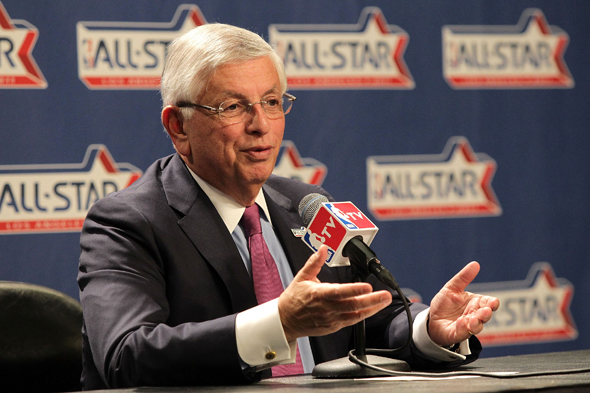
• The counteroffer to the Hansen/Ballmer deal from Sacramento, choreographed by mayor Kevin Johnson, was politely but publicly rebuked in a press conference by NBA commissioner David Stern. That was a big deal everywhere in the sports world.
At first blush, it would seem that the “treasure” of this Kings deal is like the Ark of the Covenant in the Indiana Jones movie: Open the lid and people melt.
In fact, the Hansen/Ballmer setbacks affected their companies, not their personal wealth, which is what is in play with the Kings purchase. Hansen’s fund, Valiant Capital Partners in San Francisco, manages $2.8 billion in assets and lost 7.44 percent in the final quarter of 2012. Lower in the story is the fact that for the year, the fund reported a net return of 10.32 percent. Hey, even LeBron James has bad quarters.
Hansen wrote in a letter to fund investors that said his basketball pursuits had nothing to do with the under-performance of the final quarter. Those more qualified can pass judgment on the matter, but a flagrant foul it is not.
Over in Redmond, a fine of $731 million can be paid from Microsoft’s tip jar. It amounts to one percent of the company’s 2012 earnings. The EU said Microsoft again broke antitrust law by failing to keep its 2009 promise that it would give consumers a choice of browsers and not just the company’s Internet Explorer.
Perhaps more concerning is that the fine was the fourth time the EU has busted Microsoft in nine years. If the rules are the same over there as they are here, Ballmer gets two more before he fouls out of Europe.
But the business development even more more curious was Stern’s remarks Friday in Oakland, where he was attending a Warriors game. In saying the Sacramento counteroffer “was not quite there” and at “considerable variance” with the Seattle offer, Stern seemed to embarrass publicly Johnson and potential buyers Ron Burkle and Mark Mastrov.
But if I’m Hansen, I’m pissed.
Presuming that there are political and personal games being played backstage that are hard to know at the moment, the least that can be said of Stern’s remarks is that he’s publicly coaching one side to do better via his bully pulpit. I’m fairly certain that neither Burkle nor Mastrov were bothered by Stern’s words; the scare tactic was directed at any politician or bureaucrat in Sacramento who may oppose the arena deal, as well as any potential litigant.
Stern is leveraging the shaky-kneed in his audience by saying: You’re not that good. Get busy.
But the apparent back of the hand to Sactown also has the ripple effect of putting pressure on Hansen. Since we know so little of the deal’s details, this can only be speculated : If Sacramento gets close to the Seattle offer, and there’s something about the purchase from the Maloofs or the financial structure of the Seattle arena that Stern and the owners don’t like, they can pressure Hansen to change it or lose out.
Two remarks Stern made Friday lead to that observation:
• His disclosure that there is now a preliminary meeting April 3 for the parties in New York to discuss their bids before the April 19 vote. That’s odd. Why would Hansen and possibly Mayor Mike McGinn be called before the Great and Powerful Oz to explain themselves when the memorandum of understanding and the purchase and sale agreement with the Maloofs have been long in the NBA’s hands? My guess: There’s something Stern doesn’t like. And by telling them April 3, they get two weeks to fix it. To avert potential litigation over unfair practices, the same circumstance would be delivered upon the heads of the Sactowners.
• “We’ve never had anything like this, at least in the last 36 years (his tenure in the league) that I’m aware of,” Stern said, referring to the unique situation of similar bids for the same team that involves no lease-breaking. Basically, the Kings are a free-agent franchise that provides the NBA with the rarest of opportunities to find out the open-market value of one of the least of its operations. Stern said NBA attorneys are scouring league by-laws for steps to take. What he didn’t say was they were also looking for opportunities to exploit by finding out which city is more desperate for NBA ball.
He can get away with this extortion because he is a monopoly operator with little fear of reprisal among the bidders. Also, the other owners want the highest sale price to help increase their franchise values. To that point, Stern said another thing Friday that was easy to overlook but important in understanding the NBA’s thinking.
“At the end of the day, it is for the board of governors to make the ultimate decision as to who the team will be sold to and where it will be located,” he said. “I’ve spent a fair of number of years to establish that power and prerogative within the board of governors. If an ownership group (the Maloofs) has decided to exit our league, it doesn’t retain the ultimate right to tell us where the team will be located. It is for the board of governors to decide.”
That means the normal business rules of a private transaction (Maloofs sale to Hansen) have been usurped via by-laws that vest final authority in the league. Stern wants both markets to have no choice but to jump through the highest possible flaming hoop. Because he can.
It may have been a bad week for others. For Stern the opportunist, he probably made his bosses a little more money.
23 Comments
With all due respect to the above, sometimes the simplest explanations work out better. You can just as easily see the above as the beginnings of political cover, nothing more. Johnson does NOT want to be Nickels. That outcome is probably nearly as important to him as not losing the Kings. So here we have the “different views” starting. Sacramento thinks it has a strong, compelling offer. The NBA disagrees (looking at the details, or lack thereof in the Sac “bid”, most of us see the NBA’s point). Sacramento scrambles to improve, but falls short due to lack of time. And by falling short I mean in just being able to be CONSIDERED. Not the same thing as them winning, not by a long shot. We can now start the “he said, she said” of Stern bemoaning the fact that Sacramento’s bid wasn’t stronger and how it would have been his preference to keep the Kings there all things being equal. Johnson can then dispute, rant, and argue about how the bid was fine and Sacramento wasn’t treated fairly. Thus the blame is shoved off on the NBA rather than on his shoulders. Spin is just as likely as extortion here. It’s true, we don’t know the details to conclusively tell one way or the other. But the April 3 due date (shaving off a few weeks now) is hardly a pro-Sacramento move. They’re now supposed to do what they’ve been unable to do for years in the space of a few weeks, all in light of their recent, desperate “whale search”. The NBA wants to wrap this up and since Seattle’s is the only actual bid on the table (according to Stern), that’s advantage Seattle big time.
Seattle certainly has an advantage, and have had since Hansen and the Maloofs signed the PSA. But Stern is in the power position of being able to force Sactown beyond reason because the city would lose its only pro sports team. Big incentive in that town, and Johnson is burning huge political capital to get it done. Demonizing the NBA for the Kings loss may feel good, but it counts for little there as it counted for little here.
You’re right about a simple explanation, Matt: Sacramento is more desperate than Seattle.
And in another sign of running for political cover, Johnson is now placing the onus for moving forward on Mastrov and company, walking the city’s role back some.
Johnson can’t do more than he’s done. It’s up to Mastrov etc., now. Got to get busy on the private side.
except maybe promise more things he can’t deliver
I’m thinking Stern one issue Sterno might be looking at is to be sure that the Seattle ownership group isn’t anything like the Maloof’s and to be sure of their financial footing. Especially since the Maloof’s initally accepted a very fair offer from the city of Sacremento and then backed out of it
There’s other NBA teams with similar problems, such as the Thunder with Aubrey Mclendon. He’s the money behind the Thunder and the performance of Chesapeake Engergy has affected his personal finances. He could drop out from the Thunder ownership group at some point so where would that leave Clay-Clay? It’s not like OKC has a bunch of Fortune 500 companies in the area.
If I had to guess, I’d say both Sterno and Clay-Clay will recommend moving the Kings to Seattle. Not only does the NBA have three other teams in Cali but with Sacremento about 88 miles from SF the Kings fan base overlaps into the Warriors so it would not only benefit the NBA to move the Kings into the larger Seattle market but beneift the Warriors as well by having the corner of the Northern California market. (of course, I don’t think the Sonics leaving really helped the Blazers any) I’m fairly confidant that Sterno is stringing along KJ but will ultimately claim the financial footing of his new ownership group is a concern and go with Hansen/Ballmer, especially if they pony up a little more money. And Sterno will do that just because he can.
Overally, still a 50-50 measure though. Because the NBA marches to the beat of its own drummer, and its name isn’t logic.
Actually, j, it is very logical — just follow the money. All sentiment aside, the decision rests upon what makes the NBA wealthier: A team in an attractive, bigger market, but with five other pro franchises, or the lone pride and joy of a smaller market, like San Antonio, Utah Portland and OKC?
Seattle is still in the driver’s seat, but the league will look long at market projections.
I agree that the NBA is about the money but IMO if that was the case the Sonics would still be in Seattle. Now, I get how Key Arena doesn’t hurts the economic profit but overall in a long term deal the Seattle market is much better than the OKC market. IMO, the move worked in the short term for the franchise but long term the NBA itself lost a major media market. They knew that would happen and approved it anyways.
If stern was holding Sac’s hand through this process, like Art has been claiming, then their bid wouldn’t have been such a joke. This is good news for Seattle.
Don’t believe I saw hand-holding, but I do believe Stern is overcome with flattery thanks to two rich suitors for his league. And he’s going to play them against each other. It’s his job, Billy Bob.
If there’s any argument why Seattle shouldn’t want the NBA back, it’s David Stern’s ugly mug and sickly, ghoulish smile. Especially when he makes getting a team back as excruciating as losing one in the first place.
Well, there’s a reaction from the heart. I understand it.
Art, how do you view these comments Hansen made to you back in October?:
Hansen reiterated Tuesday that he is not going to be predatory.
“We’re not going to go around saying, ‘Please sell us your team,’ “he said. “We’re not going to pry a team away.”
https://www.sportspressnw.com/2012/10/thiel-how-about-an-expansion-team-for-seattle/
I think some in Sacramento have pointed to that comment as evidence of Hansen’s Bennett-like duplicity? Do you agree with that? Or do you think his words and actions are reconcilable?
Buying a team that is for sale isn’t predatory. He has told the truth– he want’s to buy a team and move it to Seattle. He’s not pretending he’s going to keep it in Sacramento. That’s the difference and it’s a big one– like it or not. Stern and the NBA clearly demonstrated the rules when they took the Sonics. At least Hanson is being honest.
It’s true that he has been straightforward about his intent, as I wrote Jared. But the actions of owners in any sport regarding relocation are predatory in that there are only a fixed number of teams and to get one, it has to be taken away from another, weaker market. Even if it is a sale in accord with league by-laws. The fans aren’t a party to the transaction, only victims. I consider that predatory, even if the legal standard of sale is met.
I believe Hansen meant duplicating Bennett’s tactics of saying one thing about staying in Seattle and meaning another. Hansen wasn’t going to do that, and he hasn’t. Hansen made an offer and the Maloofs accepted, without pretense of keeping the team in Sactown. By prying, I think he meant using deception and manipulation.
One purpose for coming out publicly and saying the bid was too low was to take the (hot) air out of KJ’s PR machine that was roaring forward, gaining steam, proclaiming they had a “strong and competitive bid” and such. KJ and ThinkBig were beginning to drive the media narrative surrounding this and that narrative was overblown.
It’s also possible that Stern has extended an invite to Hansen/Ballmer and Mayor McGinn to the April 3 meeting because Mayor KJ and Mastrov/Burkle have been invited. Wouldn’t seem right if only one party were invited, Seattle should have the opportunity to counter to the points being made and vice versa.
Mary, I don’t think Stern cares a damn about KJ’s campaign. Stern knows KJ is trying to save political face, and accepts it. Stern’s charge is to grow the value of NBA franchises, and that is helped when two cities bid for a free agent franchise.
As far as inviting both sides, as I wrote, to do otherwise would be to engage in unfair practices, and perhaps tortious interference. The lawyers dictated that one, and Stern is a lawyer.
Perhaps, But it seems to me he or the NBA has done some reigning in on the hype coming out of Sac a few times. Like when the RoFR story started getting a lot of attention and the journalists were talking about how Seattle’s chances weren’t looking as good Stern tamped down that notion pretty quickly. And when an erronious report came out of Florida that Seattle had lost their leverage because Hansen never paid the $30M deposit within an hour the NBA issued a statement and a Maloof called the Sacbee to confirm that Hansen did make the deposit. This whole thing with Mayor Johnson grandstanding on the “very strong and competitive” offer that Sacramento buyers had put forth and KJ was redefining the situation. Stern wants to be the one defining the situation and controlling the message. I think he cares about that.
Nice of you to reply to comments BTW.
I’m through with the NBA, and have been since they colluded to steal the Sonics. Bringing a team back won’t change that. They have shown me who they really are and I believe them. Seattle has been just fine without them, and history has proven we made the right decision in not burying ourselves under debt for a professional sports team. There are many cities suffering now as a result of caving under the “team will leave” pressure, and can’t even fund what should be their priorities as a city. F Stern, F the NBA, and F any other team in any sport that holds it’s own fans hostage to their millionaire BS.
Well, MS, that would be all sports leagues then, going back to the Cleveland Spiders of the 1880s. You either accept this monoply operation, or not.
I don’t blame you for abandoning the NBA. I think there are a not-insignificant number of fans genuinely alienated by the NBA’s actions. But if you mean what you wrote, you have to stay on the sidelines even when the victory parade happens downtown.
which won’t happen
Do Not Pass Go, do NOT Collect.
So are they gonna pay or roll the dice?