

By David Eskenazi and Steve Rudman
In the last few years of his life, before pneumonia took him at the age of 81 in 1983, Howard Earl Averill spent the majority of his time taking leisurely strolls through the streets of his native Snohomish, swimming, playing poker games with pals with a $2 limit, and puttering around a two-bedroom apartment strewn with relics of a baseball era that served as a constant reminder of the 1930s.
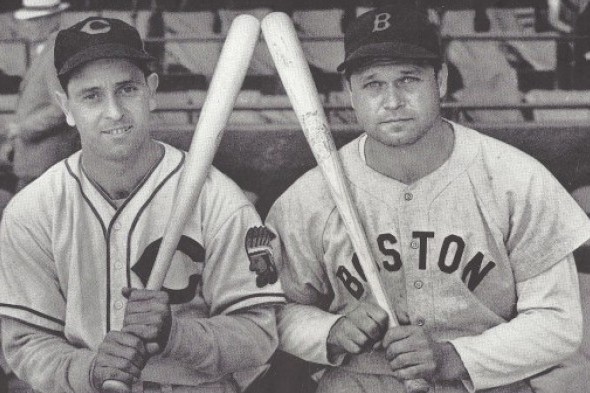
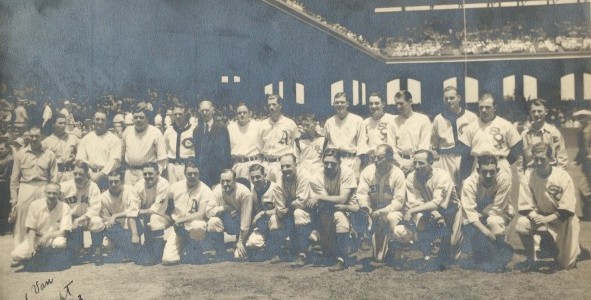
At the time, Averill had a picture on his dining room table showing the 1933 American League All-Star team. Averill stood seventh from the left, bottom row, sharing photographic company with Babe Ruth, Lou Gehrig, Charlie Gehringer, Jimmie Foxx, Bill Dickey, Lefty Grove and Eddie Collins, all now a prominent part of baseball’s rich history and lore.
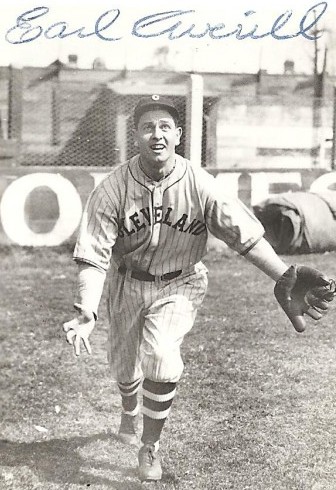
On the television set, blaring programming from Channel 3 in Everett, Averill placed an award that hed received from Commissioner Bowie Kuhn upon the occasion of his induction into the Baseball Hall of Fame in Cooperstown on Aug. 18, 1975.
Averill’s digs also featured a dozen or so plastic-enclosed baseballs, commemorative pen sets, plaques, trophies and certificates that further trumpeted a career that spanned the Presidential administrations of Herbert Hoover (1929-33) and Franklin D. Roosevelt (1933-45).
”Look here,” Averill said to a visitor, while pointing to a stack of mail. ”These are autograph requests. There must be 15 in this bunch alone. They are the most I have ever received at one time. Most of them come from kids back east, kids who are really interested in baseball. I dont get any from kids around here.”
Despite a sharp memory, Averill, then nearing 80, could not recall the last time anyone in his Snohomish neighborhood asked for his autograph, or the last time anyone sought his opinion on baseball.
“The kids here now don’t even know who I am, much less care, Averill said. ”It’s almost as if they don’t even know I exist. Now that doesn’t bug me, but I do think it’s sort of funny.”
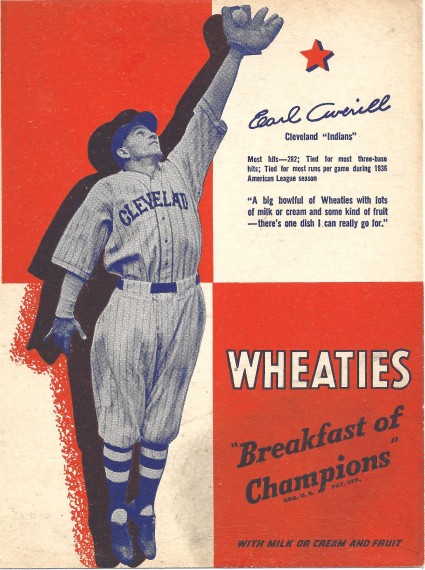
Funny in the sense that kids around Snohomish — and all over the state, for that matter — sure knew about Earl Averill in the 1920s, ’30s and ’40s, when he starred in center field for the Cleveland Indians. He was the biggest thing ever to emerge from their town.
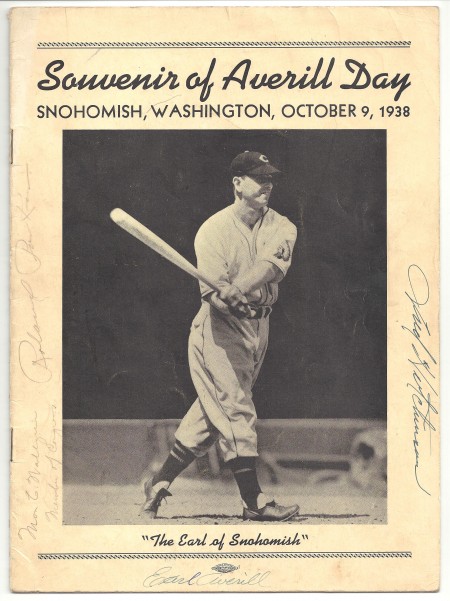
Near the end of his major league career, on Oct. 9, 1938, Snohomish honored Averill with “Averill Day,” the festivities including a game between the “Snohomish Town Team” and the ironically named “Old Timers,” who featured 19-year-old Seattle Rainiers rookies Edo Vanni and Fred Hutchinson, and Averill’s Cleveland teammate, Seattle native Jeff Heath, still fresh off a 58-hit month (August, 1938) for the Indians.
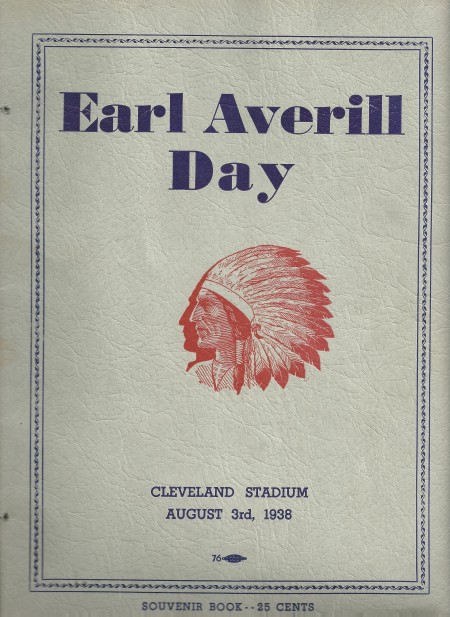
Earlier that year, the Indians held an “Earl Averill Day” in Cleveland, in which the club showered the left-handed batting star with gifts, including a new Cadillac. But years had passed since residents of Snohomish had tracked his every move.
“During the Depression, this town (Snohomish) didn’t have much pride. But we always had Earl Averill. No matter what was going on, you knew you could pick up your newspaper every morning and see how many hits Earl Averill got,” long-time coach Keith Gilbertson Sr. told the Everett Herald in 2005.
Equally amusing to the aging Averill: The Baseball Encyclopedia, which he kept handy on the coffee table, had somehow condensed 13 of the greatest seasons — 10 prime ones — that any major leaguer ever had into a one-inch recap. That hardly seemed adequate, given his accomplishments. On the other hand, Averill had a long history of being overlooked.
Born in Snohomish May 21, 1902, the son of a logger, Joseph Averill, and Annie Maddox Averill, the daughter of a pioneer family, Averill played baseball as a youth on a crude field cleared of tree stumps, and quit school at the age of 15 to work construction, in a lumber mill, and in a greenhouse owned by older brother, Forrest “Pud” Averill.
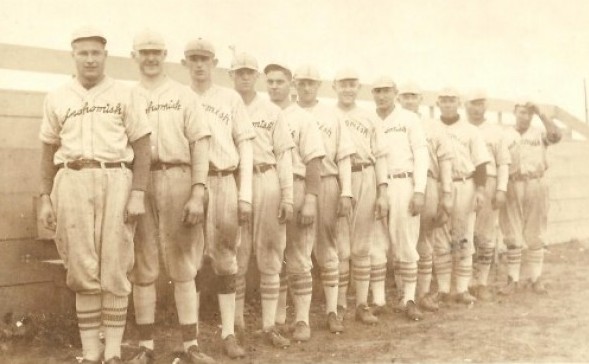
In 1920, Averill joined the newly formed Snohomish Pilchuckers, a town club named after the nearby Pilchuck River, and developed into a player of such promise over the next few years that in 1924 the citizens of Snohomish took up a collection to send him to the San Bernadino, CA., spring training camp of the Pacific Coast Leagues Seattle Indians, then coming off a 99-win season under manager Wade Red Killefer, who ran the club from 1923-27.
Considered (according to Baseball Almanac), an astute judge of talent who could buy, sell and trade with the best of them, Killefer had a reputation for succeeding with problem players. Chehalis native Vean Gregg, who pitched in the majors from 1911-25, was quoted in a Society For American Baseball Research (SABR) article as saying that Killefer “makes good with men that no one else wants, [he] likes the irreconcilables, the disturbers. He gets hold of them and makes them take out their spleen in everlasting hustle on the ball field. Wade has the kind of personality that no man, however ill-natured, can help respond to.”
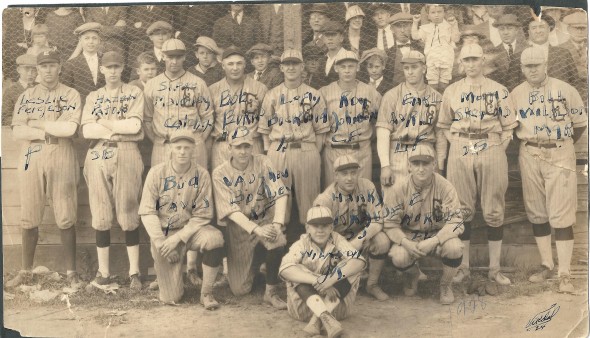
Maybe Averill, a man never easily flustered, simply did not present Killefer enough of a challenge. More likely, Averill simply wasn’t ready yet for Pacific Coast League pitching. In any event, Killefer chased Averill out of the Indians training camp.
Having failed his PCL tryout, Averill joined the Bellingham Tulips, perennial Northwest semi-pro champions, and took part in a few exhibition games with the Everett Gulls. But it was in Bellingham that Averill’s game began to change.
Bellingham manager Tealy Raymond, a former captain, shortstop and manager of the Seattle Giants, made a few adjustments to Averill’s swing (notably, he shortened it) and, according to baseball writer Alex Schults of The Seattle Times, before long, Earl was punching hits with regularity.
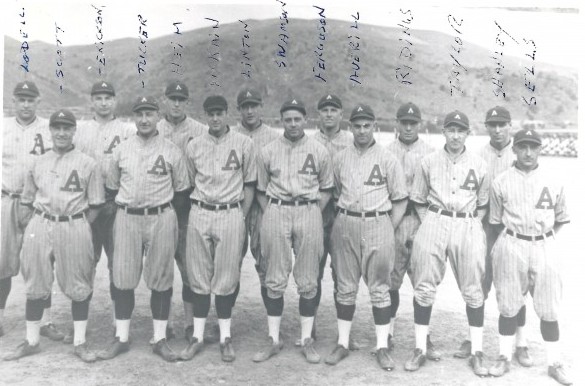
Taking note of Averill’s progress, the San Francisco Seals signed him in 1925 and sent him to the Anaconda Anodes, an entry in Montana’s Copper League, for additional seasoning (Averill and his teammates were technically employed as smelter workers for the Anaconda Copper Company, but actually paid to play baseball). Averill tore up the league, earning an invite to San Francisco’s spring training camp in 1926.
Nicknamed Rock, due to his bulging forearms, Averill made the club after having traveled to spring training at his own expense. It must have pained Killefer to watch Averill hit .348, .324 and .354 over the next three years (Averills 1928 season especially makes the ears perk up: in an extended PCL season of 189 games, Averill produced 270 hits, 53 doubles, 36 home runs, 178 runs and 173 RBIs.)
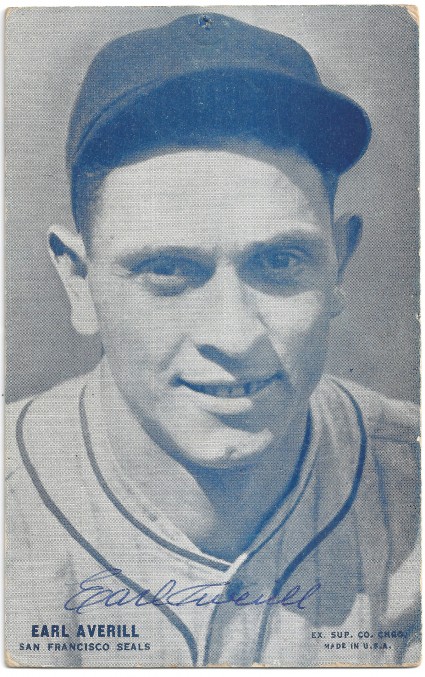
Despite his gaudy numbers and clutch play (Averill once won both games of a Seals doubleheader with home runs, each a 1-0 outcome), most major league teams did not consider Averill to be San Francisco’s best outfielder in 1928 — or even second best.
Left fielder Roy Johnson, who hit .360 with a league-leading 16 triples and 29 stolen bases, most interested major league clubs, which ranked right fielder Smead Jolley right behind Johnson, even though Jolley had won the PCLs Triple Crown — .404 batting average, 45 home runs, 188 RBIs.
The Seals did not want to sell any of their outfielders, but cash talked, the Detroit Tigers and Cleveland Indians had money to spend, and both wanted Johnson, widely considered to be a Ty Cobb in the making.
The Tigers beat the Indians to the punch, landing Johnson for $75,000. When Indians GM Billy Evans (baseball historian Bill James says that Evans was the first front-office executive to be called a general manager) learned he had lost Johnson, he took a train to San Francisco, determined to buy Jolley.
Walter Dutch Ruether, a former major league pitcher who would later play for (1930-31, 1934-35) and manage (1935-36) the Seattle Indians, made the fateful intervention before Evans could crack his billfold.
”Don’t be silly,” Ruether told Evans. “The Tigers pulled a boner when they bought Johnson. You’ll pull a bigger one if you buy Jolley. Buy Averill. You can probably get him cheaper than the other two, and he’s 10 to 1 a better ballplayer.”
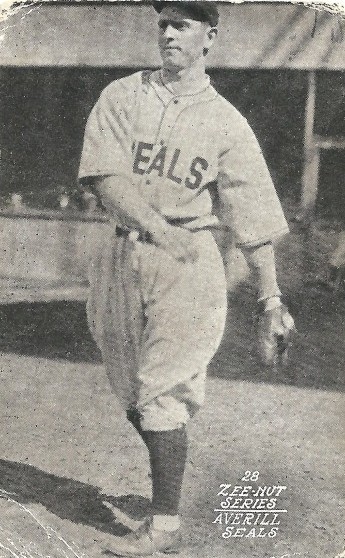
So Evans paid $40,000, $45,000 or $50,000 for Averill (depending on the source to which you subscribe), and Cleveland owner Alva Bradley, after getting his first look at the 5-foot-9 Averill, thought Evans had wasted his money. “You paid all that money for a midget,” Bradley told Evans.
“I think the price was $50,000,” said Earl Averill Jr., now a Tacoma resident. “The thing that stands out to me was that he held out when he got sold to Cleveland, and he won the argument. I think he got $10,000 of that, but I can’t verify that. My dad never talked about the money he made. I don’t think my mom ever knew what he made, either.”
Averill became an immediate sensation in Cleveland, and probably would have been named Rookie of the Year if the award had existed.
(Roy Johnson played 10 years with the Tigers, Red Sox, Braves and Yankees, but failed to make anyone forget Ty Cobb. Smead Jolley, purchased by the Chicago White Sox, played only four MLB seasons.)
As a rookie in 1929, Averill hit .331 with 18 home runs (a single-season Cleveland record) and 97 RBIs, and established post-1900 (rookie) records with 321 total bases and 71 extra-base hits. Averill’s manager, Roger Peckinpaugh, told United Press International, “He’s the best-looking youngster to come up in a long time.”
Averill went on to compile a .318 career batting average for the three teams — Cleveland (10 1/5 years), Detroit Tigers and Boston Braves – on which he played. Averill finished with 238 home runs, 2,020 hits, a .533 slugging percentage, 1,165 RBIs and 1,224 runs scored.
Averill exceeded 30 home runs in a season three times and knocked in more than 100 runs five times, with a high of 143 in 1931 (he also scored a career-high 140 runs that year). In 1936, 75 years ago, Averill produced his best season, hitting .378 with 232 hits, 28 home runs, a league-leading 15 triples, 126 RBIs, a .438 on-base percentage, a .627 slugging percentage and a fabulous 1.065 OPS.
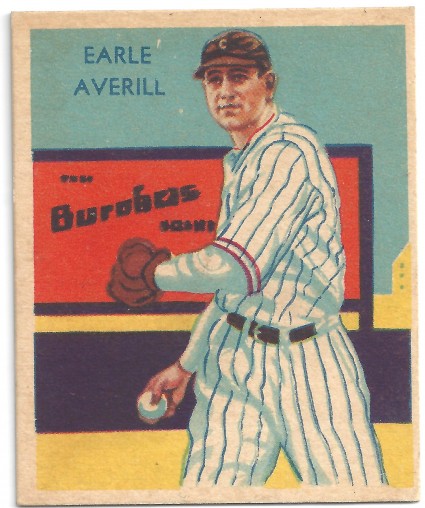
Only four batters (all Hall of Famers) Paul Waner (1,959), Charlie Gehringer (1,865), Jimmie Foxx (1,845) and Lou Gehrig (1,802) — had more base hits in the 1930s than Averill (1,786).
For most of Averill’s post-baseball life, it baffled him why the Baseball Writers Association of America refused to support his Hall of Fame candidacy.
Averill appeared on the BWAA ballot in 1949, 1952, 1955, 1956, 1958, 1960 and 1962, and voters always snubbed him. Averill never received more than 5.3 percent of the vote. One year, 1949, he received just 0.7 percent (75 percent necessary for election).
“I don’t know why he didn’t get in earlier,” said Earl Jr. “Maybe they penalized him because he weighed only 168 pounds. He looked bigger because he was so broad shouldered, but he had skinny legs.”
BWAA members today might agree with their predecessors that Averill did not warrant inclusion in the Hall of Fame based strictly on his career numbers. Averill had slightly more than 2,000 hits and just 238 home runs.
But baseball’s Veterans Committee, charged with evaluating the careers of potential Hall of Famers overlooked by sports writers, re-examined Averill’s resume and saw fit in 1975 to make him a Cooperstown enshrinee (first native of Washington state to enter the Hall). Averill’s class included Ralph Kiner, Bucky Harris and Billy Herman.
“I could have gotten in sooner, but its sure better late than ever,” Averill said after learning of his induction.
The main reason Averill didn’t gain induction sooner clearly had everything to do with his relatively short career – 13 seasons, just 10 ½ prime years – after joining the Indians as a 27-year-old rookie in 1929 (The Washington State Sports Collectors Club, one of the oldest in the country, played a grass-roots role in getting Averill selected to the HOF).
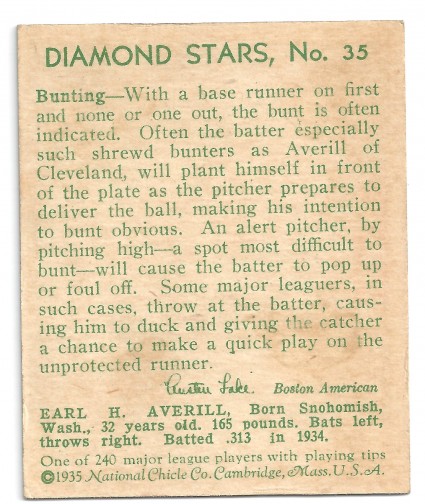
But during thoses 10 peak years, Averill averaged 189 hits, 37 doubles, 12 triples, 23 home runs, 115 runs scored, 108 RBIs and a .533 slugging percentage, an exceptional record (Averill’s RBI total of 1,078 still ranks as eighth highest over the first 10 seasons of a career).
In addition, Averill posted a higher career OPS (.929) than Hall of Famers Tris Speaker (.928), Chuck Klein (.922), Al Simmons (.915) and Babe Herman, among his contemporaries, or near contemporaries.
Except for his average number of seasonal base hits and batting average (which is close), Averill’s numbers (especially OPS) largely overwhelm Ichiro’s, matched against the first 10 years of the Mariner star’s major league career.
Another factor which may have steered BWAA voters away from Averill: In addition to his short major league life span, Averill never played on teams that left any kind of historical impression.
During the early part of Averill’s career (1929-31), Connie Mack’s Philadelphia Athletics, featuring four future Hall of Famers in Jimmie Foxx, Lefty Grove, Al Simmons and Mickey Cochrane, won three consecutive pennants (and two World Series).
After the Yankees won the 1932 pennant, Detroit emerged with future Hall of Famers Hank Greenberg and Charlie Gehringer and pitchers Schoolboy Rowe and Tommy Bridges, further keeping the Indians at bay. Even with Averill, Cleveland couldn’t keep up with the As, later the Yankees, and finally the Tigers.
BWAA voters might have also downgraded Averill for not winning a major award, such as Most Valuable Player (he finished in the top five in MVP voting four times), or a batting title. While Averill always ranked high on offensive leader boards, one or two players always ranked higher.
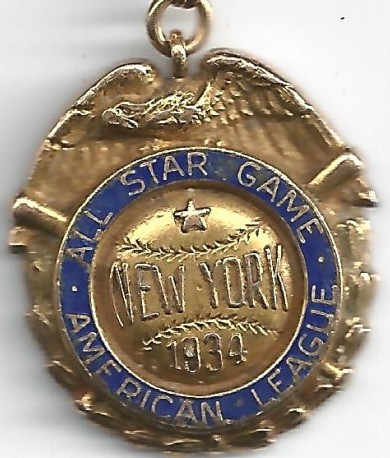
(Averill probably would have been named the MVP of the 1934 All-Star Game had the award existed. He went 2-for-4 and drove in three runs in the American League’s 9-7 victory.)
In 1931, Averill posted one of his best years with a .337 batting average, 32 home runs and 143 RBIs. But Simmons of the As hit .390 and Grove went 31-4. In 1936, when Averill hit a career-high .378, Luke Appling (another future Hall of Famer) hit .388 (Appling never hit above .348 in any other year of his career).
It’s probably unfair (and unwise) to compare players of one era to players from another. Still, Averill played fewer career games than the late Kirby Puckett. While both Averill and Puckett finished with identical .318 batting averages, Averill hit more home runs, drove in more runs, and had higher on-base, slugging and OPS numbers than the 12-year Twin. Averill waited 34 years to walk through Cooperstown’s portals. Puckett entered the Hall of Fame on his first try (2001), with 82.1 percent of the vote.
“Kirby had a big personality,” said Earl Jr., acknowledging that his father was pretty low key. “That didn’t hurt a lot of guys who went into the Hall of Fame. There’s a lot of of politics in that.”
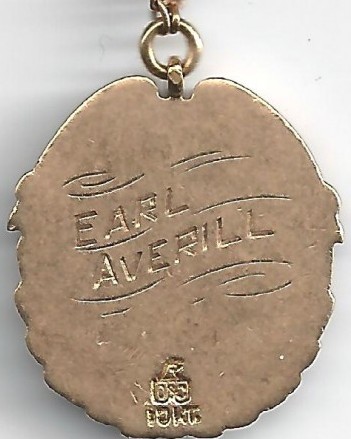
Averill made the American League All-Star team six times, starting in 1933, and remains the only outfielder selected to the All-Star Game for each of the first six editions of the mid-summer classic. Further illustrating the esteem with which Earl was held: In November of 1934, Averill became just one of 15 major league players (along with the likes of Babe Ruth, Lou Gehrig, Jimmie Foxx and Moe Berg) selected to visit Japan and demonstrate their skills.
“Interesting thing,” said Earl Jr. “When my dad was in All-Star Games (1936-38), with Joe DiMaggio, dad was in center field and DiMaggio (the center fielder for the Yankees) was in right (meaning Averill, perhaps due to seniority, deserved to start in center).
Had it not been for Averill’s late start and a bad back that compromised his swing, he might now be a standard part of any conversation involving baseball’s all-time greats. For his sake, Averill told a number of interviewers before his death that he thought he could have put up numbers similar to Pete Rose had he had a full career.
He might have. At various times, Averill led the American League in games (1934), hits (1936), at-bats (1931), triples (1936) and putouts (1929, 1934).
But after batting .378 in that 1936 season 75 years ago, Averill’s undoing occurred in late June of 1937 when his back went out while he was on another hitting tear.
“I was having a helluva year until my back went haywire in Philadelphia,” Averill told the Society for American Baseball Research. “My back affected my swing.
When his back went (doctors diagnosed a congenital spine malformation), Averill had to alter his swing. As a result, his batting average began a steady decline, to the point that he finished the 1937 season with a .299 average, far below his usual numbers.
Averill enjoyed one more respectable season, hitting .330 in 134 games in 1938, but his back condition continued to worsen and his career went into a steady eclipse. With Averill’s plate potency gone, the Indians traded him to the Detroit Tigers June 14, 1939, and the Boston Braves signed him as a free agent Feb. 26, 1941 (he played in the World Series with the 1940 Tigers). He didn’t last one month of the season before the Braves released him, ending his major league career.
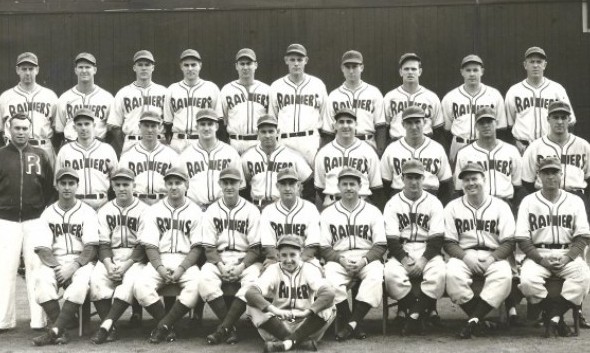
Unwilling to concede he had lost it, Averill joined the Seattle Rainiers in 1941. He appeared in 78 games, but the facts couldn’t be disputed: Averill hit .247 with one home run, and his career ended.
Averill is famously remembered as the batter who shattered Dizzy Dean’s big toe with a line drive during the 1937 All-Star Game. Averill’s screamer effectively ended Deans career, or so the story goes (according to SABR, Averill had breakfast with Dean on the morning of the game).
Averill never believed that his line drive ended the pitcher’s career; rather, Averill thought that Dean would have made a full recovery if St. Louis manager Frank Frisch hadn’t pitched Dean so soon after the injury.
A couple of more days, Averill told several interviewers, and he (Dean) would have been ready.
Averill never could understand why the Dean incident remained such a permanent part of his legacy, especially since he accomplished so many interesting things. And this is where we begin to fully appreciate the The Earl of Snohomish, who consistently shows up on some of the more unusual baseball statistical lists.
For example, despite the 36 seasons that have elapsed since the Veterans Committee called Averill’s name for Hall of Fame induction, he remains the only Hall of Famer to have hit a home run in his first Major League at-bat, a solo shot off Earl Whitehill of the Detroit Tigers April 16, 1929 (Cleveland’s catcher that day, Luke Sewell, managed the Rainiers for part of the 1956 season).
On Sept. 17, 1930, Averill set a major league record by hitting four home runs (three in the opener with eight RBIs and one in the nightcap with three RBIs) and driving in 11 runs in a doubleheader against the Washington Senators (went 5-for-8 in the two games). That always remained Averill’s favorite personal highlight (he hit two other balls that day that barely missed being home runs).
On Aug. 17, 1933, Averill became the first native of Washington state to hit for the cycle in a major league game. He went 4-for-4 with three RBIs in a 15-4 Cleveland victory over the Philadelphia Athletics (John Olerud is the only other Washington state native with a hit cycle to his credit, and Olerud had two, on Sept. 11, 1997 for the Mets, and on June 16, 2001, for the Mariners.
While Ichiro has produced 10 consecutive 200-hit seasons, Averill is the only Washington state native with a 200-hit major league season, a feat he accomplished twice, and nearly accomplished four times. He had 209 hits in 1931, 232 in 1936 and 198 in 1929 in 1932 (198-hit seasons occurred in 154-game seasons).
As far as can be determined (SABR and Retrosheet have delved into this), only eight players have produced 60 hits in a single month. Ty Cobb twice had 67 — July 1912 and July 1922 – and George Sisler exceeded 60 three times – September 1920 (64), June 1920 (61), and August 1921, (60).
Averill produced a 60-hit month in July, 1936 (60-for-133, .451), en route to a 232-hit season. He also had a 57-hit month in July of 1930, when he went 57-for-137, batting .416. Ichiro’s best month: 56 hits in August of 2004.
“That’s incredible, 60 hits in a month,” said Earl Jr. “Dad always used to say to me, ‘hitting was easy for me, I never had to work at it.’ But 60 hits in a month?” I think I got 60 hits one year.”
(Only one other Washington state native has had as many as 58 hits in a month – Seattle native Jeff Heath, who had 58 for Cleveland in August of 1938. When Ichiro had 56 hits in August of 2004, that represented the most in the majors since Heath’s 58).
Averill had five or more hits in a game five times (last on Aug. 8, 1936), four hits in a game 34 times, a 20-game hitting streak (July 4-25, 1936), three home runs in a game (Sept. 17, 1930), and five or more RBIs in a game 12 times. The Boston Red Sox so respected Averill that they walked him five times Aug. 29, 1932.
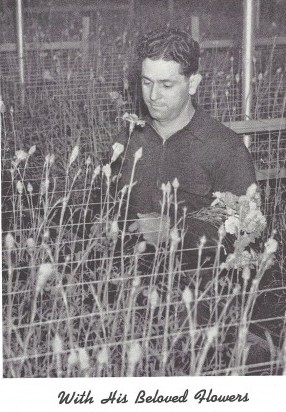
When his career ended, Averill returned to Snohomish and operated a greenhouse — Averill Floral — with his brother Pud (Earl returned to Snohomish after every season and worked in the greenhouse). Eight years after his retirement (1949), he opened the Earl Averill Motel, located on the town’s north end (from Everett), and ran it for two decades.
“My dad was always fun to be around,” said Earl Jr. “He was a hard worker, he loved to work in that greenhouse, and he loved to work when it was hot. In the greenhouse, we’d run the temperature up past 100, and that’s where he liked to work.”
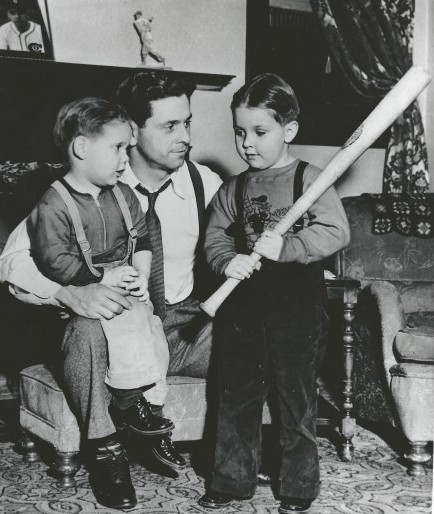
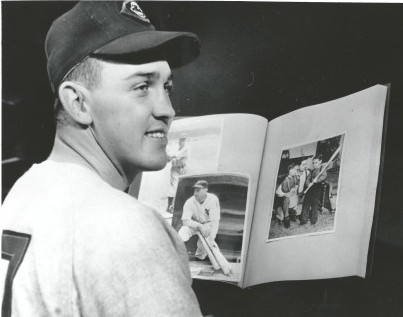
In addition to his induction into the Hall of Fame, Averill took particular pride in becoming the just fourth player to watch his son reach the major leagues – and do so with his former team. Earl Jr. made his debut April 19, 1956, with Cleveland and hit .242 over a seven-year career with the Indians, Cubs, White Sox, Angels and Phillies.
Earl Jr., who played for the Seattle Rainiers (1964) and Seattle Angels (1965) toward the end of his career, couldn’t hit like his father, but not many players could. Earl. Jr. hit 21 home runs for the 1961 Angels, and did one thing his father never did – blast a pinch-hit grand slam– on May 12, 1959, off Milwaukees Lew Burdette. Only 121 players have done that, making a pinch slam as rare as a no-hitter and a cycle.
“That was the only time I ever faced him (Burdette),” Earl Jr. said. “I went up to pinch hit, it was a Monday in Chicago, and there were no other games on. The count was 2-2, and Burdette threw me a spitter right at my waist on the inside of the plate. He thought it was a strike and walked off (the mound), but the umpire called it a ball. I hit the next pitch on the catwalk.”
Earl Jr. told Dan Raley of the Seattle Post-Intelligencer in 2005 that, “I tried to follow in the footsteps of my dad. That was a mistake because there was no following him.”
In Earl’s final years, he loved to talk about the past, but didn’t dwell on it. He kept current with the box scores through The Sporting News, avidly followed the Mariners, and had an appreciation for modern players.
“Lefty Grove was difficult to hit against,” Averill told his apartment visitor. “But I wouldn’t exactly relish facing Nolan Ryan, either. Charlie Gehringer was the best player I ever saw, but Joe Morgan could play in any era.
Averill died Aug. 16, 1983. He is buried at the Grand Army of the Republic Cemetery in Snohomish.
“A great player became part of history yesterday,” The Everett Herald wrote. “Earl Averill left us with a long trail of his achievements worthy of his Hall of Fame status, a bevy of notable feats, statistics that are unmatched by even some of history’s great players, and enough memories to keep the old timers talking a long time.”
In 2005, The Everett Herald selected the greatest athlete in Snohomish County history. The newspaper could have picked, say, quarterback Chris Chandler, who starred at the University of Washington and played 17 years in the National Football League. Instead, it chose Howard Earl Averill, bringing to light a career unknown to the younger kids of Snohomish and Washington state.
Check out David Eskenazis Wayback Machine Archive. David can be reached at (206) 441-1900, or at seattlesportshistory@gmail.com
37 Comments
Another wonderful trip on the Wayback Machine. The Earl would be pleased.
Another wonderful trip on the Wayback Machine. The Earl would be pleased.
Thanks Dave. Another great article.
Thanks for visiting the web site.
Thanks Dave. Another great article.
Great story on The Earl. I grew up on the block next to the Averill Floral greenhouses in Snohomish and took my first baseball swings on a vacant lot that we called “Averill field” at the corner of Sixth and Pine. As a youth in the 1960s, I saw Earl Jr. play for the Rainiers and was well aware of his dad’s reputation as a old baseball star. Earl Sr. had many baseball photos of himself with other old diamond stars on the wall of his lobby at the now-gone Earl Averill Motel. There was also a large brick building near the Pilchuckers’ old home field (renamed Averill Field) by the railroad tracks at Second and Pine that had a painted wall proclaiming Snohomish as the “Home of Major Leaguers.” Great memories, and great baseball tradition for a local kid growing up in that era.
Great story on The Earl. I grew up on the block next to the Averill Floral greenhouses in Snohomish and took my first baseball swings on a vacant lot that we called “Averill field” at the corner of Sixth and Pine. As a youth in the 1960s, I saw Earl Jr. play for the Rainiers and was well aware of his dad’s reputation as a old baseball star. Earl Sr. had many baseball photos of himself with other old diamond stars on the wall of his lobby at the now-gone Earl Averill Motel. There was also a large brick building near the Pilchuckers’ old home field (renamed Averill Field) by the railroad tracks at Second and Pine that had a painted wall proclaiming Snohomish as the “Home of Major Leaguers.” Great memories, and great baseball tradition for a local kid growing up in that era.
Dave,
Great writings. Would like to see the printed version for keepsake. I’m sure all my kids would also like a copy. Call and I’ll make arrangements.
Earl
I’ve alerted Dave. I had the pleasure of spending a day with Earl way back when. What a guy he was.
Yes. This kid would definitely appreciate a printed copy. Daniel will use it for his Hall of Fame report in fifth grade this year!
Dave,
Great writings. Would like to see the printed version for keepsake. I’m sure all my kids would also like a copy. Call and I’ll make arrangements.
Earl
Yes. This kid would definitely appreciate a printed copy. Daniel will use it for his Hall of Fame report in fifth grade this year!
Dump Chone. Regardless of the huge monitary loss, that has already happened. Cut the guy and trade Ryan, Send our non-hitting first sacker back to Tacoma if he can make that team. Take those players out and oh by the way, we don’t need Oliva either. I can’t remermber which team itwas, but one is hurting for a catcher. Oliva is not the future. Some club loaded with hitting can afford the spectacular defense that Ryan brings to the table. The Mariners can’t..
Bring some of the phenoms the team keeps bragging about up from AA if they don’t have one that fits in Tacoma.
Watch for Ichiro to retire at the end of this year. He has way too much pride to play out the string for jut money.
I think you are right, that he may retire from the MLB, but look for him to play out his career in Japan. A fitting swan song for a national icon.
I agree with Art. The Ms are terrible, they’re no fun to watch, ownership (or at least the owner’s lackeys, Lincoln and Armstrong) doesn’t care about winning, and there is little hope on the horizon. Because where is the hope? Ackley and Montero aren’t stars, certainly not like Trout and Trumbo are with the Angels; they might develop into decent journeymen, and so might Seager, and maybe Saunders, but the rest of the roster is mostly a wasteland. Smoak is a lemon, Olivo, Ryan, Figgins, Ichiro, Kawasaki, well, you know the names.
And why trade Felix? It implies that we’ll get a real haul of talent in return, but haven’t we been down that road before? Smoak was the centerpiece of the Lee trade, and Smoak is a bust. Trivia question: who did we get for Fister? Montero has worked out okay, but only because Pineda got injured.
Like Art says, we need new ownership. It’s a death spiral; people aren’t coming to the games, revenue falls, payroll falls, and the cycle continues.
As for Z, the jury is out. He’s made some big mistakes (Figgins, Smoak), but I’ll cut him some slack, for a while longer. Damn, though. He got off to such a good start.
I mean, just compare our fish (Carp) to their fish (Trout). That says it all. Why don’t we ever get a hitter like that?
Fister’s trade gave us Wells (.757 OPS/.333 wOBA with good defense) and Charlie Furbush, both of whom are contributing to the team right now. I’m still hoping Furbush can work as a starter, but he’s been great in relief this year, as well as Tacoma 3B Francisco Martinez.
Jury’s still out on the trade, but it’s looking good so far.
thanks Steven. You’re right, Wells might work out, Furbush has been good as you say . . . I guess our 36-51 record has blinded me to a few of these minor bright spots.
And then where does the blame ULTIMATELY lay?, and for the fact Seattle had to go halfway across the world to find a man willing to buy the Mariners?
Too bad that the group wanting to build a Sodo arena for NBA and NHL teams has not bid for the Mariners instead. Big money guys with local roots who would not bow to the uninformed wishes of a Japanese majority owner who has never bothered to see his team play. Seattle is filled with guys with money who would love to own a MLB team here. They need to step forward with an offer.
Nothing will change so long as the Nintendo/Lincoln leadership continues.
Disagree about the trading of Felix. He remains a cornerstone player. Without him, there are no cornerstones, merely “maybe” younger players who may or may not develop. Lincoln cut payroll this year by $10 million at a time when the team badly needed a veteran professional bat or two to help the young players transition this season and next. Another lost season.
Jack Z. made a big dumb signing with Figgins and made a dumb trade of Morrow for League.
Otherwise he has built a good farm system which is at least a year away from making a difference.
I have to give the Ms credit for one thing. They’ve helped raise my consciousness about the horrors of ingress and egress into SoDo. As a result, I won’t be attending any more games this summer as I don’t want to be an accessory to the crime of killing all those Port jobs. Thanks for the advice Chuck and Howard!!!
The complacency of ownership is beyond question. At the same time, these guys (starting with Jack Z) were employed to build an organization from the bottom up, by doing a better job than their predecessors at finding, drafting, and developing young talent.
They’ve been on the job now, only a half season less than Bavasi’s team – and haven’t demonstrated any improvement. That despite several years of losing records and the corresponding early first round picks. That’s not a money issue.
Not only are the Mariners terrible – so are the triple A Rainiers (also in last place, so much for our re-stocked farm system). Year after year quality organizations continue to out-scout the Mariners, and that’s not the owners fault. Your example of the A’s is case in point.
This is Jack Z’s first job as a GM and as such has no track record of running an organization. As much as Lou Pinella is given credit for Mariners past success – GM Pat Gillick was every bit as responsible (Gillick put together a World Series Team in Toronto before Seattle and Philly after). I say forget trading Felix – and hire someone to put this thing back together who knows what the heck he’s doing and has a track record of having done so. I think Mr. Gillick still keeps a place in town and isn’t doing much these days.
Yo King,,,
You must have a short memory. When Bavazi left the cupboard was more bare that a poley.
The M’s have a good ownership group that kept baseball in Seattle, but until they change their methods they’ll never be a great ownership group. The hole this club has been in the past since 2004 is inexcusable considering ownership said they could never be competitive without an open air stadium.
Since its very possible they could be getting an NBA/NHL neighbor across the street at some point there should be a sense of urgency to be a consistent, long term winner.
The team in my opinion, is headed in the right direction. You cannot just tear up the foundation when things get off to a slow start. I say give these kids a chance. Jack Z has done a great job stock piling talent that was, a depleated farm system thanks to Bavasi it will take a few more years to clean up his mess. Just remember the players we gave up on that are on the all start teams this year. How about Bryan LaHair, Adrubal Cabrera , R.A. Dickey, Adam Jones and Adrian Beltre . Go ahead and throw David Ortiz in there also. Think about if we would have had Jack Z instead of that team wrecker Bavasi. He probably would have assembled one hell of a team by now. Give Jack and theentire management team that he has put together a chance. It takes quite a few years for players to come through the minors and become a productive Major leaguer. We have been giving up on them way to soon. Remember Brett Boone? And who can forget Raul Ibianz when he came up. Second time around they were both true major leaguers. Give our youngsters a chance.
I just returned from Cincinnati where as I child I had the good fortunate to grow up when the Big Red Machine was in its prime. During my visit I attended a game against – of all teams – the Brewers aka the Pilots. While enjoying the game I spotted a pretty amazing stat in their game day program. In 131 years as a professional baseball organization – the oldest I might add – the Reds have had exactly one, I repeat, one 100+ losing seasons. ONE!
On the other hand the Mariners in a mere 36 years have produced FIVE, not FOUR, not THREE, not TWO, not ONE but FIVE 100+ losing seasons.
Howard, Chuck and Mr. Hiroshi Yamauchi, please do the honorable thing and sell the Mariners to a local owner – a true baseball guy. Look at the results of your efforts – LOOK AT THE RESULTS OF YOUR EFFORTS – they are beyond defensible. Thank you for keeping the Mariners in Seattle now please sell. We, baseball fans/ Mariner fans, are so very tired of the ineptitude of your management/ownership. It is beyond pathetic.
Even if viewed from a purely entertainment perspective, the Mariners are such a poor choice. Here’s a sad fact. Over the past 6 times I have been to a Mariners game only once have I stayed to see the final out. Guess who was pitching a one hit shutout? The King.
When trying to defend the indefensible my Father would often ask me a rather crude question. “What do you have if you have nothing in one hand and shit in the other?” No matter how hard I protested the answer was always “The Mariners”.
Really good article. This has been on my mind a lot lately…as I serve my time in purgatory, cough, I mean DC. At least the baseball in purgatory is great, though it has been hot lately…oh and speaking of hot…
The Nats are almost like the 2001 M’s, almost. Mostly in that you expect them to pull it out every night, and are dumbfounded when they don’t. Morse (remember him?) is getting healthly, Gio is EXACTLY what they hoped he’d be, or more. Zimmerman’s elbow looks good. Bryce Harper I feel is maybe a little overrated, but is absolutely electrifying at times, sometimes he’s like Ichiro was (though Harper is 19 vs. 27 for Ichiro in his “rookie season”…nothing but upside to him). If Zimmerman gets completely healthly, forget it, they are a lock for the NL East. Oh, and I forgot about friggin’ Jason friggin Werth, due back in a few weeks. I don’t follow the Orioles, except to see the line on Adam Jones, I’m just happy for the guy you know?
One big difference between the Nats and 2001 Ms (and Seattle vs. DC), is it’s July, Nats are in first place, and sports radio here is mostly obsessed with RGIII, sigh. The Nats are averaging 30,000 attendance I think. They occasionally sell out for interleague play, when the Yankees come, and when the Phillies come down, the park fills up with a-holes from Philly. That did not happen in Seattle, the M’s owned the market as I recall, in 2001, selling out every home game. That time, obviously, has passed.
Yes the difference is ownership, ownership, ownership (and certainly the Nats getting rid of Bowden). Ms ownership is complacent (I’m thinking Yamauchi is the Nintendo version of Howard Hughes locking himself in a Vegas casino penthouse), and there’s the distraction of divorce of the minority owner, and the moribund front office. That said, I think the problem is more CEO Lincoln/COO Armstrong.
I will say, though, that Safeco, SODO, Chinatown, and Pioneer Square are a world better than the National’s stadium site (for now). Seattle still wins on that front. Or maybe I’m just nostalgic. But that’s not a sound business model, IMO. Winning is.
You make a lot of good points, Art. But you know what I haven’t seen or heard anyone talking about, all season long? Our coaching staff, aside from Wedge. I know we have some good pitchers (Felix, Vargas, Millwood when he’s healthy, Furbush, Wilhelmson, and probably some others that I’m forgetting), but our star closer lost it and hasn’t been able to get it back yet. How is our pitching coach helping him recover? Why haven’t we optioned League back down to AAA Tacoma, so he can help them blow saves and give up 5 – 1 leads?
And what about our batting coach? We started out the season cold as ever, then got a little hot right at the middle of the first half of the season, but it looked like the only times we could swing the bat well were when we were facing pitchers who hadn’t seen us yet, and were still throwing fast balls at our young guys. Now the whole league knows that we can only hit fast balls, and we might see one or two per batter (not per at bat, but per batter) per night. Wedge even mentioned it in an interview last week that I heard on the radio somewhere. He said that we “missed one or two fast balls” the night before, and that “we can’t afford to miss any of those when we see so few.” Well of course we can’t! But wouldn’t it be better for us as a team if we could afford to miss a few fast balls because we’d learned to hit off-speed pitches too? There’s no way we’re ever going to manage a winning record if all we can hit is fast balls. But what is our batting coach doing about this problem? Apparently nothing, because the only people on our team who can hit off-speed pitches are people who came up pre-Wedge, and had some practice time with previous batting coaches, and even they’re losing the ability.
The Mariners are simply playing the odds. And the odds say, someone is always losing. Unfortunately, losing has become institutionalized by a “throw darts at the problem” upper management, concerned more about the price of beer than hiring a stud hitter. Perhaps too, the Japanese ownership situation has become too invisible aka an old Howard Hughes.
When Alex Rodriguez was weighing his options he said, in effect, “Whether I stay or go, You have to bring in the fences 10′.”
The Mariners have not signed a credible home run hitter since.
Why would a hitter who gets paid by the numbers come to a pitcher friendly ballpark like Safeco?
Dear Art,
It is the Mariner fans, especially Seattle sports fans in general, who deserve the horrid team play that they get.
When the M’s were winning 116 games a season, it was the Seattle fans who criticized Sweet Lou and Pat Gillick for not “building a farm system.” Now, the M’s are a farm system… for the rest of the league.
I frankly like the M’s ownership. Why? Because they aren’t trying to bilk the city out of millions, bitching about low attendance, feeling “disrespected” and attempting to move the team.
The M’s were purchased by a Japanese owner who did so for the quality of life issue of the city. Call it civic pride. He did it so baseball would be here for the next 100 years.
Everyone gripes about Ichiro and others who stick around too long, but really, aren’t these the same critics who get ticked when A-Rod and Griffey Jr. say “show me the money?”
The M’s, Sonics, Sounders and Seahawks are playing to the level of their fickle, non-existent fanbase. If those teams win, the banshees come out criticizing that they are getting young players. When those teams lose with young players, the banshees get upset that the teams don’t win.
Face it, Seattle fans (of which I am one by region) absolutely suck.
Jack Z has done an admirable job turning the crap that Bavazi left us with a strong AA team and some potential all stars in Ackley, Seager, Montero and yes, Smoak. All these guy are/were HIGHLY coveted They can’t all be stiffs, can they?
And you’ve gotta believe that the young pitchers will have a couple of #1’s in their ranks.
Much better then Sexton, Broussard,Lopez, Yuny, Washburn, Bedard, Silva, etc.etc. etc.
Bavazi had to have had pix of Chuck to hold on to his job for so long……Not one good deal by that son of a Dodger.
Touche Art! I actually agree with you
Player aquisition is much like the M’s batting, let the good ones right down the middle go by to show patience and swing at the bad ones in the dirt – at least the rest of the league can feast on Mariner left-overs.
Art’s last line sums it up. IMO, so far as a GM Jack Z. reminds me of Dick Balderson. Great evaluator of talent but hasn’t made the moves to make the club a winner. Wedge gives young players the opportunity they need to become a solid pro but the jury is out if he’s the one to make the club a consistent winner. Hope owners don’t revert to the ways of George Argyos and start trading everyone away.
You know, these observations and comments have been repeated incessantly in all the blogs and column comments for, well, seems like forever. Everybody gets it– there is no love lost re Howie/chuckster, and their sardonic attitude and completely disingenuous comments about the community and press continue when they sneak out from behind the curtain for 10 minutes every couple of months.
It makes me wonder: what would we see/hear as flies on the wall of the FO? Do these guys bother to read this stuff? Do they dismiss it as pesky fandom chatter without substance or significance? Do they smirk and count the profit awaiting when they sell? Do they pretend they’re really what they say in public, even behind closed doors? And what about their immediate underlings? Do they do the usual corporate-mandated ‘just play the game/ mouth the company line” and collect their paychecks, or is there some disgruntledness and disgust, some challenge, or –improbable-courage towards speaking truth to power?All of the same could be wondered about the boardroom– the minority owners. It is just an amazing sociological phenomenon– the elephant in the civic living room, and nobody in room seems to notice. I just don’t get it. The status quo has never been so unchallenged in what is really a publicly political arena. I hope for leaked memos and emails…
The other side of the door is probably populated with lifers and there’s no risk taking from that group. Besides, if anyone hints at disloyalty, they’re quickly gone … never to be honored with a bobblehead night.